Touring Gear · 2026-08-23
Best Backpacks and Gear Bags for Electric Violinists Who Carry Pedals, Cables, and Content Gear
For most electric violinists, the best bag is a structured hybrid backpack that keeps cables, wireless packs, batteries, tablet, and one light content setup separate from the violin case. My best overall pick is the MONO FlyBy Ultra because its break-away laptop section, protective shell, and luggage pass-through fit real show days better than a generic commuter pack. If you travel lighter, the MONO Stealth Alias or UDG Ultimate Backpack Slim make more sense. If content gear matters as much as pedals, the Peak Design Everyday Backpack and Thule Covert 32L are stronger buys.
Follow Tanya Strings on Google
Add the site as a preferred source to see more new violin posts from Tanya Strings in Google.
Affiliate disclosure: Some links in this article are affiliate links. I may earn a commission if you make a purchase, at no extra cost to you.
What is the best backpack for most electric violinists?
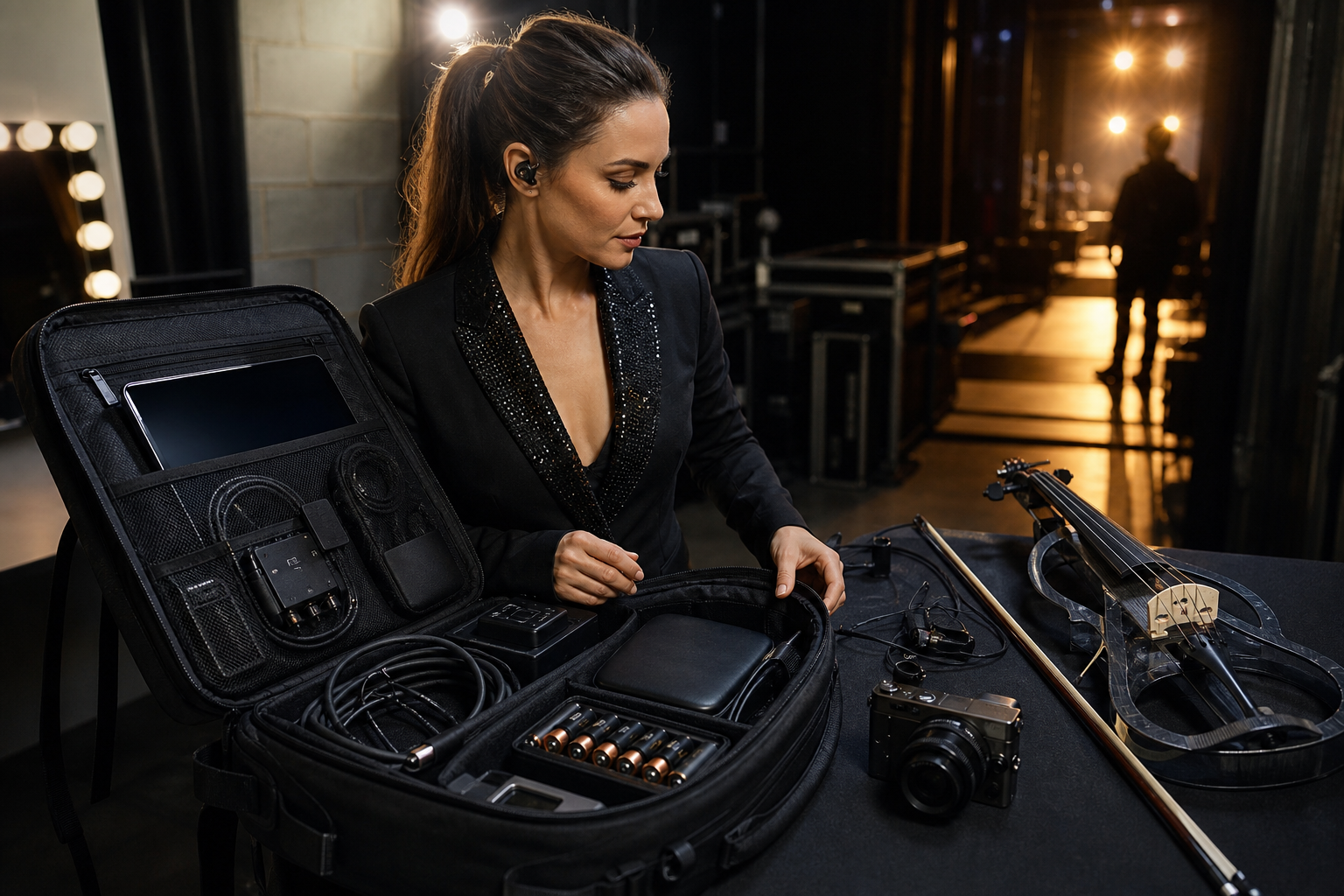
The safest first answer is the MONO FlyBy Ultra. Tanya Strings needs a bag that survives load-ins, keeps the small expensive things from becoming pocket chaos, and still moves cleanly through airports, weddings, clubs, and backstage corridors. MONO built the FlyBy Ultra around a detachable laptop bag, shockproof shell structure, room for a 17-inch laptop, and a luggage pass-through. That combination matters more than fashion. A show-day backpack should help you arrive organized, set faster, and stop losing mental energy on cable nests and dead-battery drama.
My performer rule: if the bag makes you unload everything just to reach one adapter, one wireless pack, or one battery case, it is not a real electric violin work bag.
Which backpacks and gear bags are worth buying right now?
This shortlist stays focused on bags that help a working electric violinist carry stage tools and creator gear without replacing the actual violin case. If your instrument still needs better protection first, read my guide to violin cases for electric violinists who travel to gigs. If the next bottleneck is filming or audio, pair this article with my guides to tripods, portable recorders, and instrument cables.
| Product | Best for | Why Tanya would carry it | Watch out for | Links |
|---|---|---|---|---|
| MONO FlyBy Ultra | Most electric violinists who want one premium touring backpack for stage gear and creator essentials | I trust it because the 2-in-1 layout, padded shell, 17-inch laptop support, and luggage pass-through feel designed for real transit instead of office commuting. | It is premium-priced and heavier than minimalist bags, so it makes the most sense when you genuinely use the capacity. | Official · Amazon |
| Gruv Gear Club Bag Classic | Frequent flyers who want denser organization and carry-on discipline | I like it because the 20-liter layout, carry-on sizing, luggage-handle sleeve, and shelf-like organization make airport days calmer and faster. | At about 6 pounds empty, it rewards organized travelers but can feel heavy if you overpack it. | Official · Amazon |
| Peak Design Everyday Backpack 20L | Hybrid performer-creators who carry one camera, one tablet, and a tight accessory kit | I would use it when content matters every week because MagLatch top access and weatherproof side zips make cameras, tablets, and small audio tools easier to reach quickly. | It is less ideal for bulky pedal or power loads than the more musician-focused bags here. | Official · Amazon |
| Thule Covert DSLR Backpack 32L | Electric violinists who travel with a bigger camera workflow plus stage essentials | I like it because the removable camera pod, roll-top expansion, 32-liter volume, and tripod pocket suit performers who film seriously on the road. | It has the biggest footprint in this list and can feel like a camera bag first if your rig is mostly audio accessories. | Official · Amazon |
| MONO Stealth Alias | Local shows, city commutes, and lighter creator loads | I would buy it when speed matters more than maximum volume because it is very light, expands from 13.7 to 18.4 liters, and still protects a laptop and core accessories. | It is not the answer for heavy one-bag flight dates with lots of chargers, pedals, and content hardware. | Official · Amazon |
| UDG Ultimate Backpack Slim | Budget-conscious players who still want real laptop-and-accessory organization | I respect it because the 1.33 kg weight, 17-inch laptop space, tablet pocket, expandable main compartment, and cable-friendly storage solve a lot for the money. | Its slim format needs careful packing if you carry bulky interfaces, larger pedals, or dense battery kits. | Official · Amazon |
Why is MONO FlyBy Ultra my best overall touring pick?
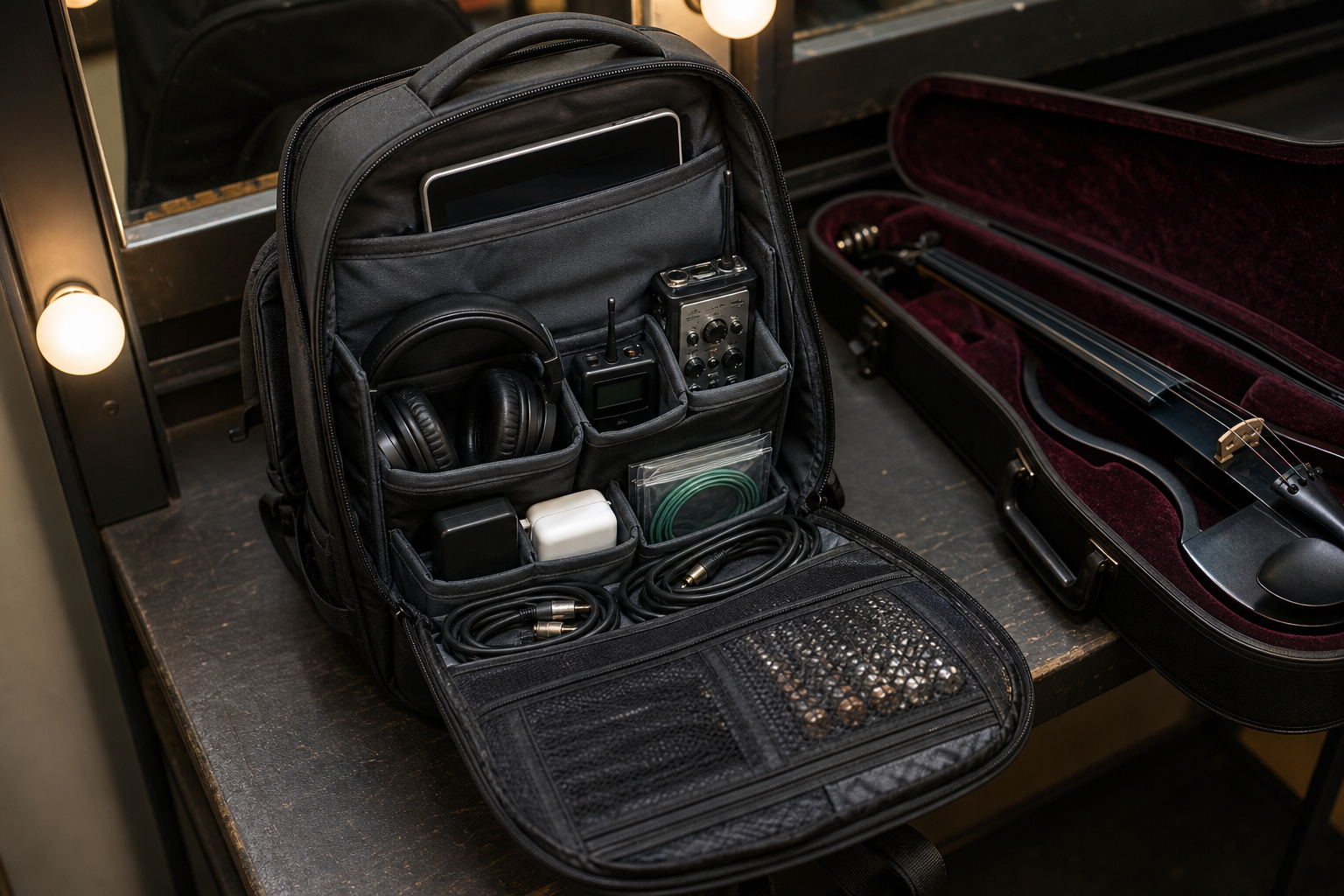
The MONO FlyBy Ultra is the cleanest all-around answer because it behaves like a touring work bag. MONO frames it as a creator pack with a detachable laptop bag, water-resistant ballistic nylon, shockproof shell structure, contoured straps, and a luggage pass-through. That combination is ideal for the electric violinist who carries cables, spare strings, batteries, in-ears, tablet, and one compact creator kit on the same day. Tanya Strings does not need a backpack that looks clever on a spec sheet. Tanya needs a backpack that still feels logical after load-in, soundcheck, performance, and late-night teardown.
Who should buy the FlyBy Ultra first?
Buy it first if you want one bag to live beside the violin case on almost every paid date, flight, and content day.
- Pros: touring-friendly structure, removable laptop section, strong protection, airport-ready transit features, and serious organization.
- Cons: expensive, heavier than minimalist options, and more bag than you need for very light local sets.
When is Gruv Gear Club Bag Classic the smarter airport choice?
The Gruv Gear Club Bag Classic is the better answer when your biggest pain is airport organization, not raw stage punishment. Gruv Gear gives it a 20-liter capacity, under-seat-friendly carry-on sizing, a luggage-handle sleeve, thicker backpack straps, and a shelf-and-drawer style interior that helps tech-heavy musicians separate the small things. Tanya Strings would choose it for fly dates, hotel moves, and creator travel days where the bag needs to behave like a disciplined mobile office for music gear. It is less rock-and-roll rugged than the MONO vibe, but stronger when every cable, charger, and passport needs an assigned home.
Why does the Club Bag feel good for travel-heavy performers?
Because it rewards the violinist who wants the bag packed once, checked mentally once, and then trusted for the rest of the day.
- Pros: excellent compartment discipline, carry-on sizing, strong tech-travel behavior, and easy suitcase integration.
- Cons: heavy before loading, more structured than casual users need, and less elegant for bigger content setups than the Thule.
See the Gruv Gear Club Bag Classic
Which bag works best for hybrid performance and content capture?
That answer splits between the Peak Design Everyday Backpack and the Thule Covert DSLR Backpack 32L. Peak Design is the tighter, cleaner daily bag. Thule is the larger travel-and-camera bag.
Why would I pick Peak Design Everyday Backpack 20L?
Peak Design positions the Everyday Backpack as a bag for everyday and photo carry, with MagLatch top access and dual side access through weatherproof UltraZips. That makes it excellent for the electric violinist who regularly films reels, performance clips, and livestream support content but still wants a backpack that looks sharp offstage. Tanya Strings would use it when the camera, tablet, and quick-access accessories matter every week and the heavier pedal or power load lives somewhere else.
- Pros: fast access, refined creator workflow, strong weather protection, and polished hybrid use.
- Cons: premium price and less natural fit for chunky stage hardware.
See the Peak Design Everyday Backpack
When is Thule Covert 32L the better fit?
Thule gives the Covert a removable camera pod, roll-top expansion, back-panel access, space for a 15.6-inch PC or 16-inch MacBook Pro plus an 11-inch tablet, and a side pocket that can hold a tripod. That is a serious advantage when the same performer also carries camera bodies, lenses, or a more deliberate content rig. I would choose the Thule when filming quality is closer to a second business line, not just casual behind-the-scenes capture.
- Pros: larger content capacity, flexible camera pod, tripod-friendly, and strong for travel production days.
- Cons: bigger footprint, more camera-biased feel, and easier to overpack.
See the Thule Covert DSLR Backpack 32L
When is a slim minimalist backpack enough?
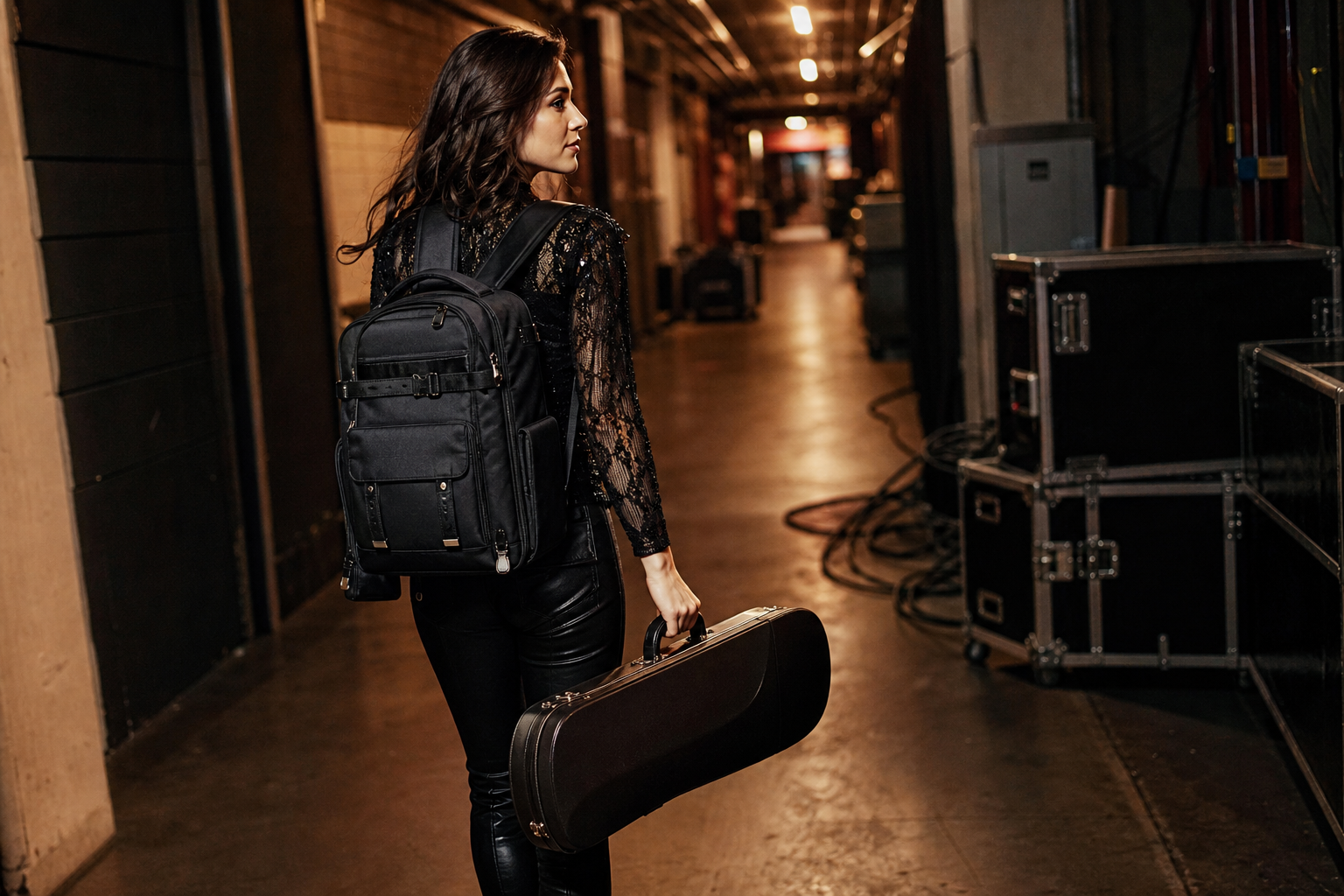
Minimal bags win when the show is local, the camera setup is small, and the violin case already handles most of the heavy lifting. The best answers here are the MONO Stealth Alias and the UDG Ultimate Backpack Slim.
Why would I choose MONO Stealth Alias?
MONO says the Alias is 50 percent lighter than the Classic FlyBy, with expandable storage, a water-resistant shell, room for laptops up to 15 inches, and a volume that grows from 13.7 to 18.4 liters. That makes it a smart city-show bag when I want a cleaner silhouette and do not need full fly-date capacity.
- Pros: light, sleek, expandable, and still protective enough for daily creator and stage essentials.
- Cons: not the right choice for dense power kits, backup audio, and large travel loads.
When does UDG Ultimate Backpack Slim make more sense?
UDG gives the Slim a 17-inch laptop compartment, tablet pocket, expandable main compartment, outside USB charger connector, and a weight of about 1.33 kg. Tanya Strings would point budget-conscious players here when they need real organization for cables, charger blocks, and one small controller or recorder without paying flagship money.
- Pros: better value, low weight, helpful organization, and strong laptop-plus-accessory behavior.
- Cons: shallower interior and less premium protection feel than the MONO and Thule options.
See the UDG Ultimate Backpack Slim
How should electric violinists buy a backpack or gear bag?
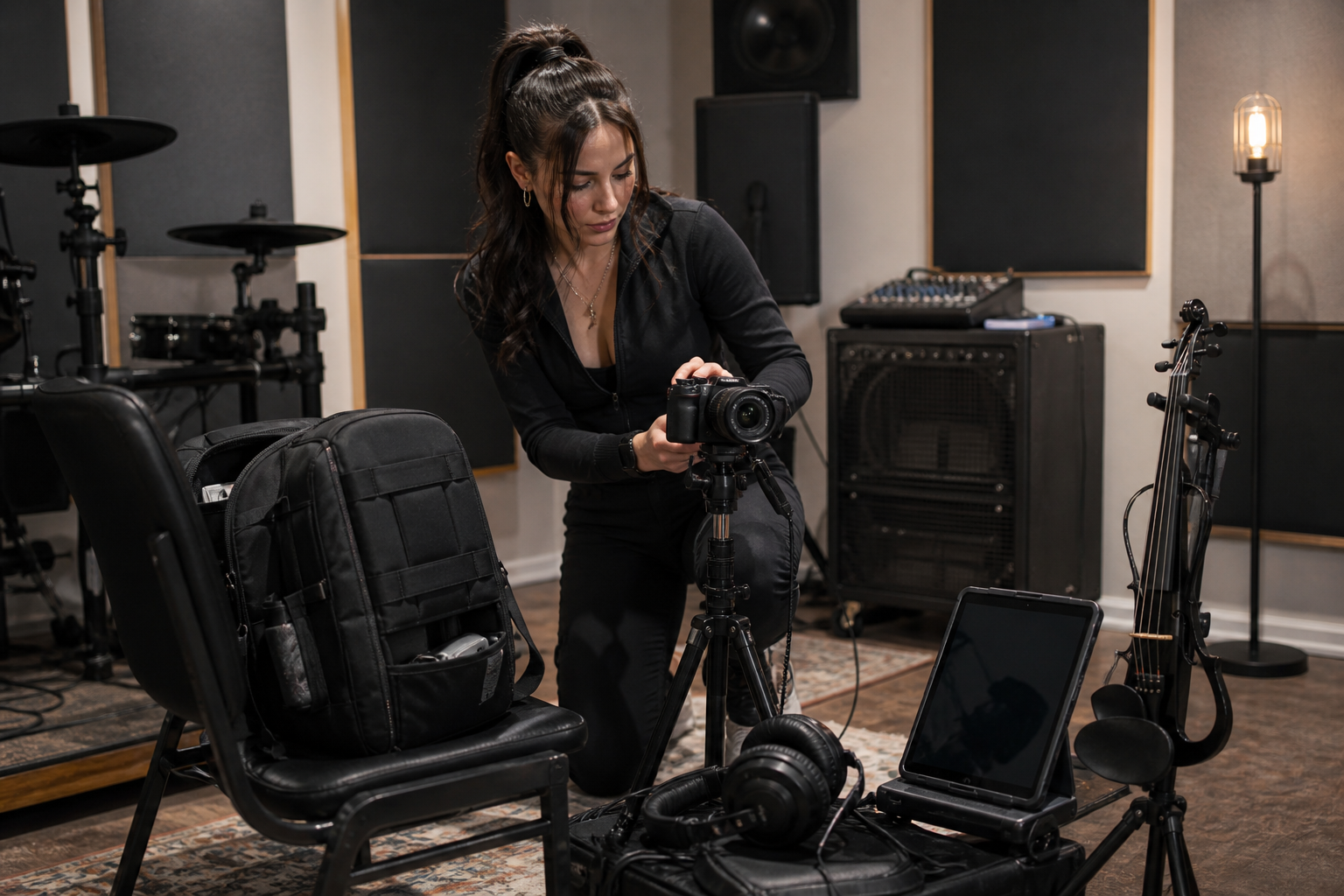
Buy around your real load-in pattern, not around the fantasy version of your rig.
My buying checklist:
- Start with your fixed items: tablet, in-ears, spare batteries, strings, chargers, cables, and one small content tool usually define the correct bag faster than the violin itself.
- Separate hard from delicate: power bricks and metal adapters should never crush in-ear cases, compact cameras, or wireless receivers.
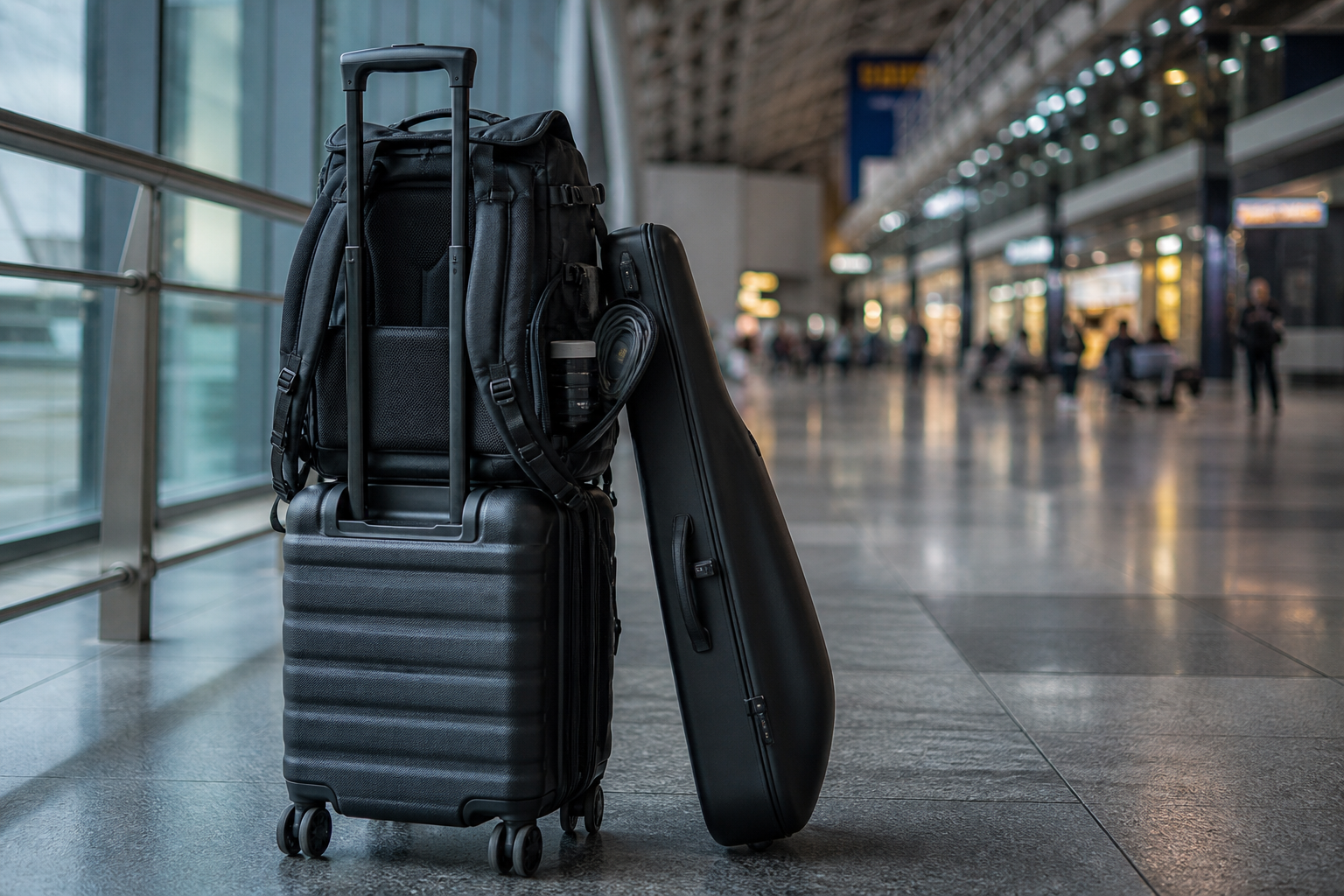
- Respect the one-shoulder reality: the bag still has to work while the other hand carries the violin case.
- Choose real travel behavior: luggage pass-through, carry-on proportions, and quick passport access matter if flights are part of the job.
- Leave room for one upgrade: a bag packed to 100 percent on day one becomes useless when you add one recorder, one light, or one extra battery system.
- Do not turn the bag into a junk drawer: if the design does not encourage consistent reset after every show, it will decay into backstage clutter.
What should always stay packed in the bag?
Tanya Strings treats the backpack as the permanent support kit, not as a random daily tote. These items earn a fixed home because they solve expensive little problems fast.
- Signal path basics: one main cable, one backup cable, one short patch cable, and any small adapter your rig regularly needs.
- Power insurance: charged AA or AAA sets, rechargeables, charger, USB-C cable, and one compact power bank if your workflow depends on phones or tablets.
- Fast repair items: spare strings, microfiber cloth, rosin, tape, small multitool, and a labeled pouch for tiny hardware.
- Performance control tools: in-ears, earplugs, wireless packs, and the page-turn or cue device you do not want buried during setup.
- Creator basics: compact tripod plate, camera battery, card wallet, or small recorder if filming and content capture are part of the business.
What do electric violinists still ask before buying one?
Should a backpack replace the violin case?
No. The backpack should support the violin case, not replace it. Let the case protect the instrument and let the backpack control the accessory chaos around it.
Is a camera backpack or a musician backpack better?
Pick the musician bag first if the load is mostly pedals, DI boxes, chargers, and wireless accessories. Pick the camera bag first if performance content is a serious revenue or visibility tool for you.
How big should a show-day backpack be?
For most working electric violinists, roughly 18 to 32 liters is the useful zone. Much smaller gets restrictive. Much larger invites heavy, sloppy packing.
What should come out first if the bag is too heavy?
Start by removing duplicates you do not actually use every week. Keep the always-fails items, not the fantasy extras. Heavy “maybe” gear is usually the first mistake.