News · 2026-08-18
Violin News Roundup: Indianapolis, Cataraqui, Hanami Froom, and Shure's Live-RF Lesson
As of Tuesday, August 18, 2026, the most useful violin news is about runway, not hype. The International Violin Competition of Indianapolis has already made its September path public, including Jessie Montgomery's new commissioned solo work and a Sirena Huang recital inside the week. In Kingston, Cataraqui Chamber Music Festival closes tonight after pairing chamber concerts with an Indigenous Cultural Corridor. In Oregon, Hanami Froom's barn date turns a small-format concert into a real violin event. And on the production side, Shure's latest field report is a reminder that live ambition still depends on RF discipline.
Follow Tanya Strings on Google
Add the site as a preferred source to see more new violin posts from Tanya Strings in Google.
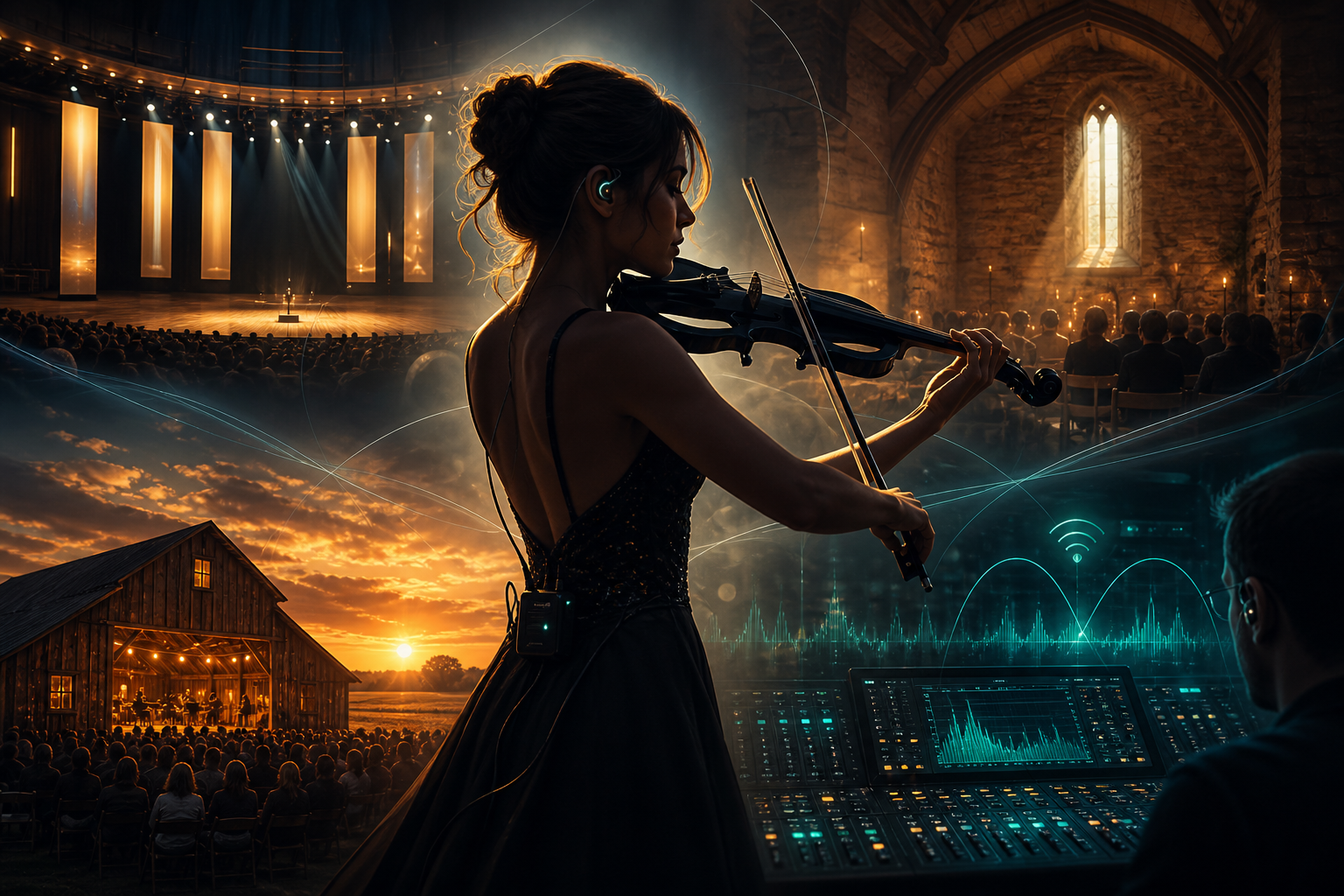
Why does the Indianapolis schedule matter already?
Because serious violin events become more real when audiences can see the full public path in advance. The Indianapolis now shows the 12th Quadrennial Competition from September 17 to October 4, 2026, starting with opening ceremonies at Newfields and moving through preliminaries, semi-finals, classical finals, and the final concerto round with the Indianapolis Symphony Orchestra under Leonard Slatkin. The most useful detail is not just the calendar. It is how clearly the event defines the artistic checkpoints. The semi-finals include the world premiere of Jessie Montgomery's Rhapsody No. 3 for Solo Violin, the September 29 donor concert features 2022 Gold Medalist Sirena Huang with pianist Chih-Yi Chen, and the last round separates Mozart-or-Haydn classical control from Romantic concerto weight. For players, planners, and fans, that is a high-clarity model. It tells people exactly where the pressure points will be.
Tanya's performer take: when a competition publishes its structure this clearly, it stops feeling like distant prestige and starts feeling like a watchable performance story.
What makes Cataraqui more than another small summer festival?
Because the Kingston frame is not only about repertoire. Harmonaire Musique says the Cataraqui Chamber Music Festival runs from August 5 to August 19, 2026 at The Spire, and the official page is explicit that the project pairs chamber performances with an Indigenous Cultural Corridor and workshops. Tonight's closing concert, on Tuesday, August 18 at 7:00 p.m., features SongHa Choi and Ying Zhang in a program that moves from Kreisler and Bach to Ysaÿe, Coleridge-Taylor Perkinson, and Brahms. That is already a strong violin recital arc. What gives it extra weight is the surrounding context: the corridor is listed as free admission, the festival names the local cultural grounding directly, and the whole run is presented as a meeting point rather than a sealed specialist room. That matters for violin culture now. The strongest chamber events are not dumbing the music down. They are building a sharper reason for people to enter the room.
Tanya's performer take: audiences respond more deeply when a festival tells them why this music belongs in this place, not only who is on stage.
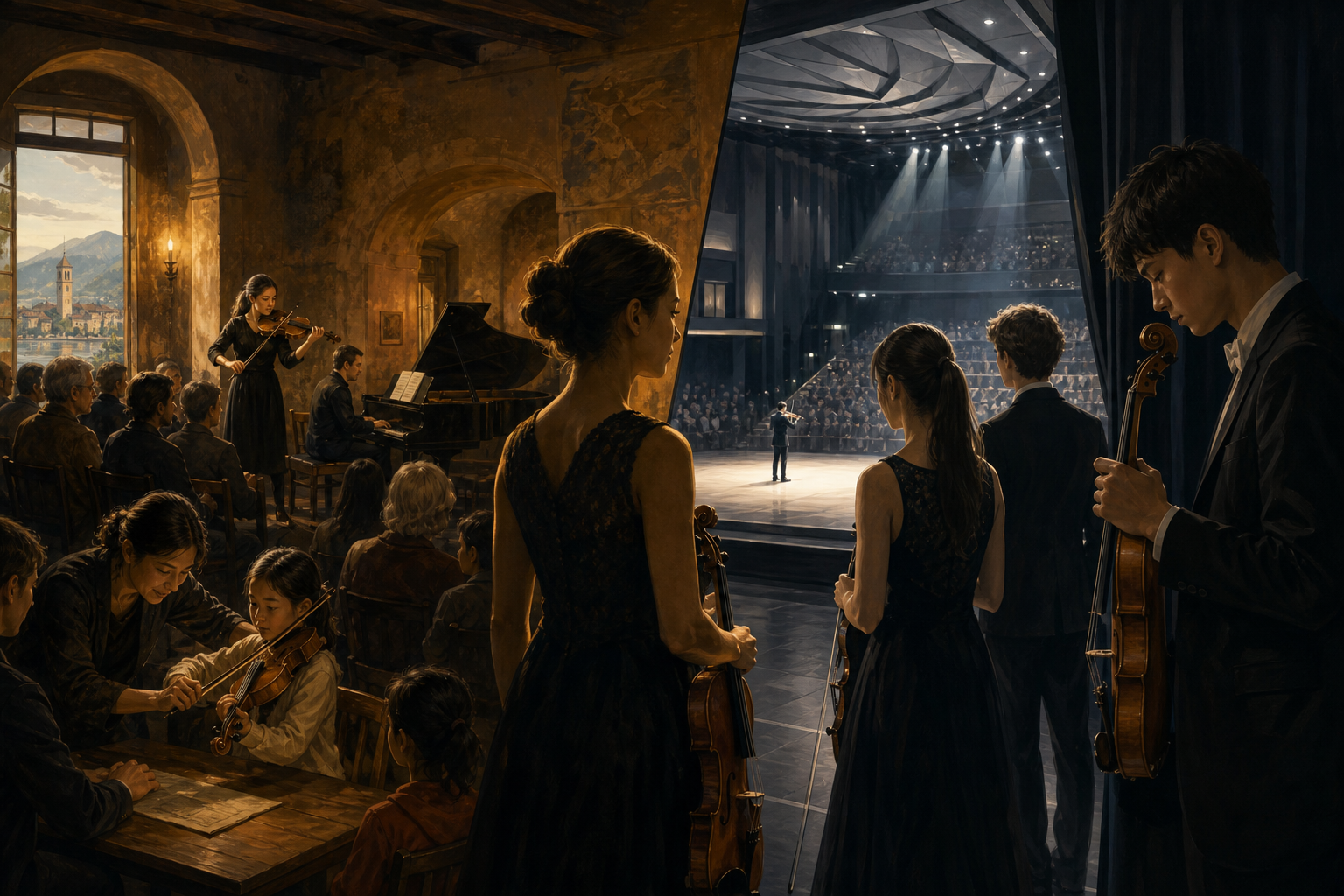
Why is Hanami Froom's August 18 barn date a useful signal?
Because it shows how a presenter can make violin feel vivid without arena scale. The Concerts at the Barn calls tonight's August 18 event its grand finale and builds it as a two-part program: Bartók's Sonata for Two Pianos and Percussion first, then Hanami Froom with Ben Kim in Bartók's Romanian Folk Dances, Corigliano's The Red Violin Caprices, Chausson's Poème, and Sarasate's Zapateado. The page also does two smart practical things. It keeps tickets available on site the same day, and it extends a free-child option with an adult ticket. Those details matter because they make a current violin appearance easier to act on, not just admire from a distance. Froom is framed there as a Portland-grown artist with recent Aspen, Rome Chamber Music Festival, and Savannah Philharmonic appearances. That is exactly the kind of rising-performer positioning more presenters should make easier to see.
Tanya's performer take: a smaller room still feels major when the program has shape, the artist story is legible, and the attendance decision is easy.
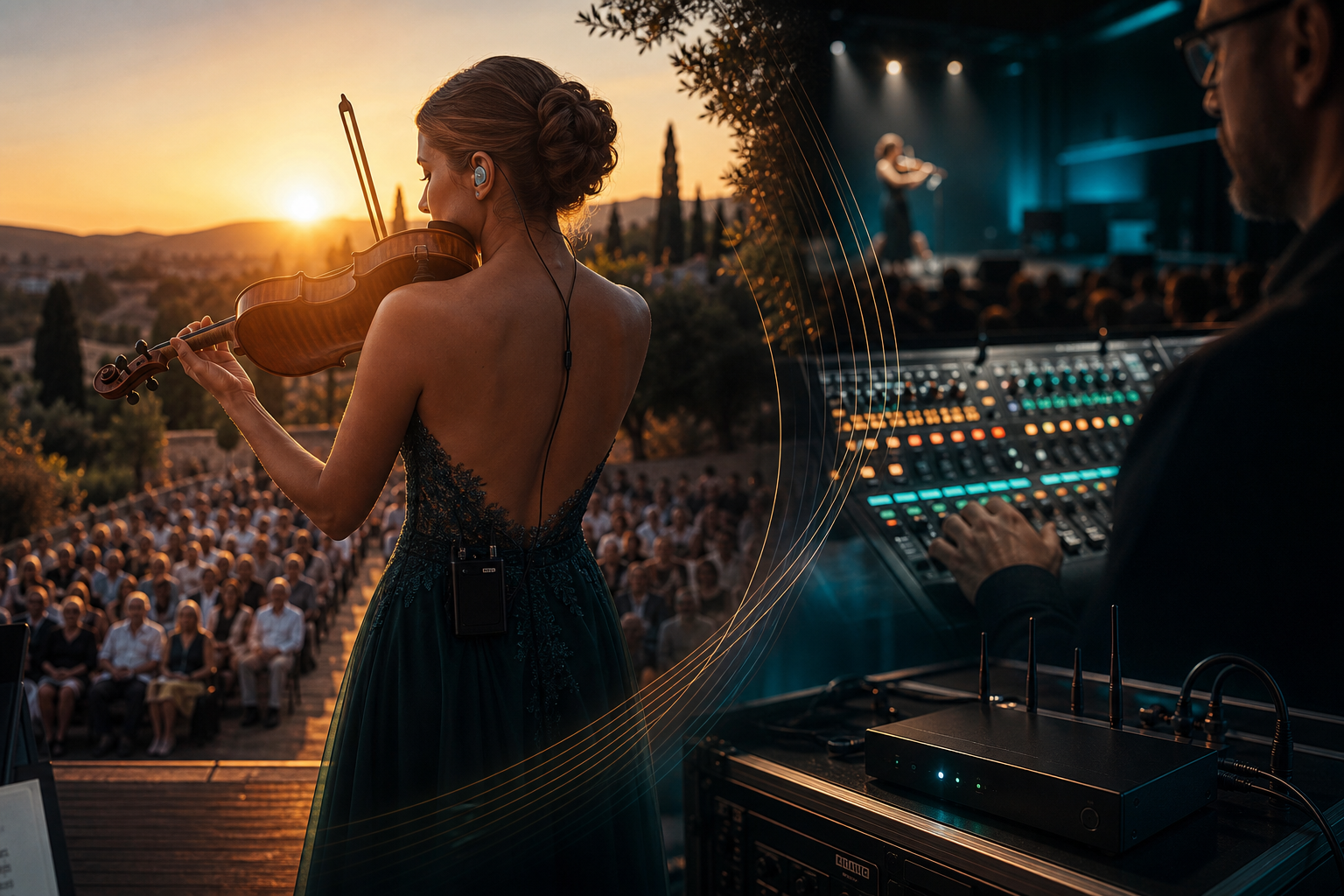
What does Shure's live-RF lesson change for stage-minded violinists?
It sharpens the reminder that stage freedom is never only an artistic question. In its August 3 press release on a major halftime production, Shure says the deployment used 12 channels of Axient Digital PSM, ShowLink remote control, Quadversity-enabled receivers, and the DCA901 broadcast microphone array in one of the hardest wireless environments available. The company also notes that monitor engineers could manage transmitter settings in real time from one position. For working electric violinists, crossover artists, and event planners, the takeaway is not that everyone needs stadium hardware tomorrow. The real lesson is that monitoring, control, and RF planning increasingly sit inside the performance itself. If your set depends on movement, backing tracks, click, or precise cueing, your technical system is part of your musical reliability. That is why Shure's earlier Axient Digital PSM firmware work on more dependable transmission options still matters beyond the biggest productions.
Tanya's performer take: when the control layer is stable, performers play bigger, move more naturally, and stop wasting musical focus on avoidable technical anxiety.
What should violinists, planners, and fans watch next?
- Watch whether Indianapolis turns its published structure into a broader public build-up, because clear competition storytelling creates attention before the first note.
- Watch whether more chamber presenters borrow Cataraqui's place-based framing and pair concerts with cultural or educational context that feels integral rather than decorative.
- Watch how often presenters back rising violin soloists the way The Concerts at the Barn is backing Hanami Froom: clear billing, current repertoire, and easy same-day access.
- Watch which live acts treat monitoring and RF planning as part of show design, because the technical layer is increasingly what separates smooth performances from stressful ones.