News · 2026-07-11
Violin News Roundup: Summer Masterclasses, Lincoln Center's Bruch Signal, and Live-AI Accompaniment
As of Saturday, July 11, 2026, the most useful violin news is less about one celebrity headline and more about how serious music is being framed for real audiences. The Music Academy of the West's masterclass calendar keeps top violin artists in public view this month, Lincoln Center's July 17-18 Bruch program gives Simone Lamsma a visible midsummer platform, last week's Guardian review showed crossover strings working without gimmicks, and two recent arXiv papers bring live AI accompaniment closer to practical stage use.
Follow Tanya Strings on Google
Add the site as a preferred source to see more new violin posts from Tanya Strings in Google.
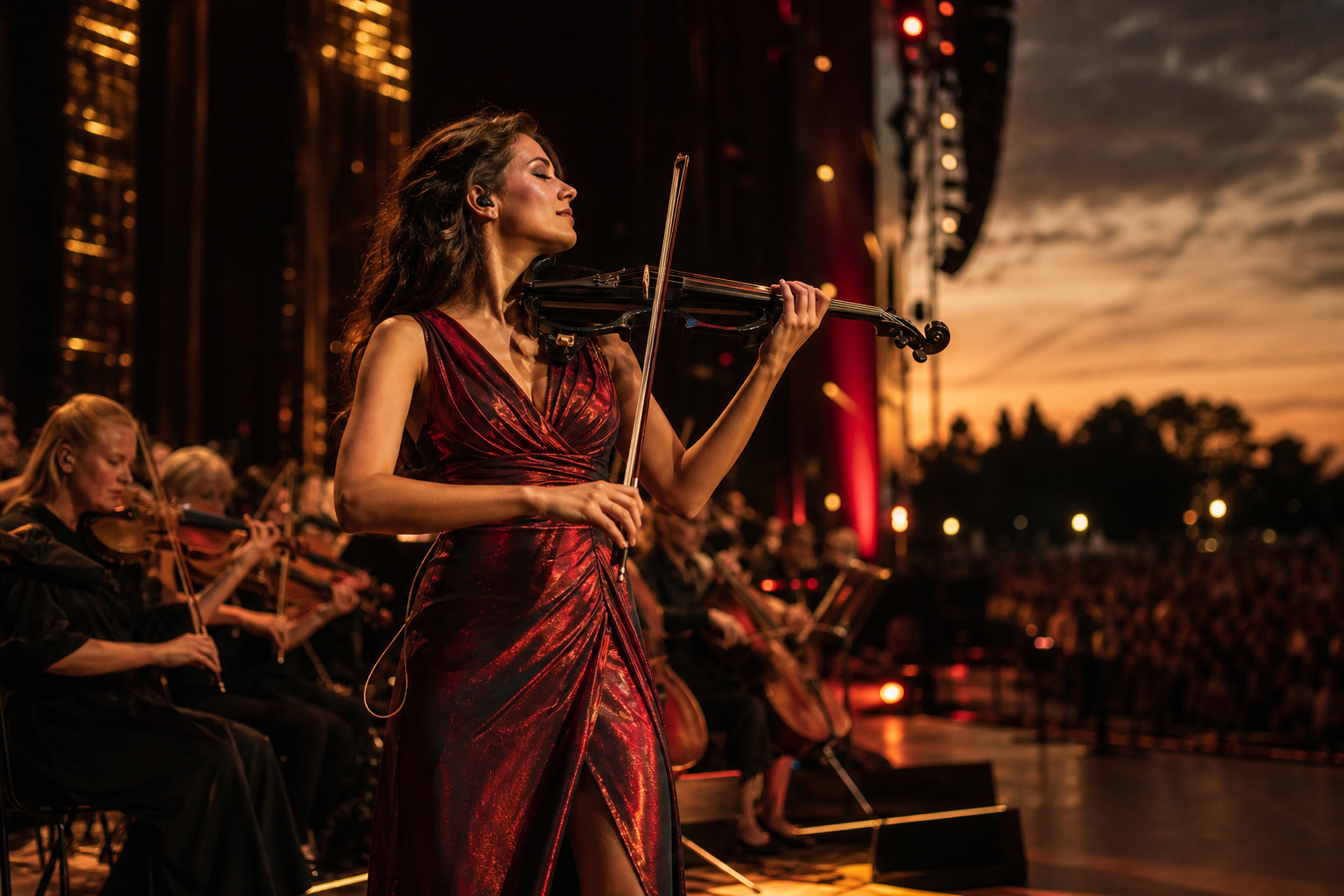
What does Santa Barbara's current masterclass run say about violin careers now?
The clearest answer is that top-level training works better when audiences can actually see it happening. On the Music Academy of the West masterclass calendar, violin masterclasses are publicly scheduled with Frank Huang on July 9, Martin Beaver on July 14, Sibbi Bernhardsson on July 16, Jennifer Koh on July 21, Helen Kim on July 23, Robyn Bollinger on July 30, and Stefani Matsuo on August 6. That matters because the institution is not hiding violin development behind closed doors. It is presenting elite instruction as part of the festival's visible summer product, alongside the wider event calendar. For violinists, that is a strong reminder that craft itself can be public programming. For presenters and fans, it makes the artist pipeline easier to understand in real time instead of years later through biographies.
Tanya's performer take: this is the right kind of visibility. When people can watch how advanced players are coached, violin stops looking distant and starts looking alive, serious, and worth following from the inside.
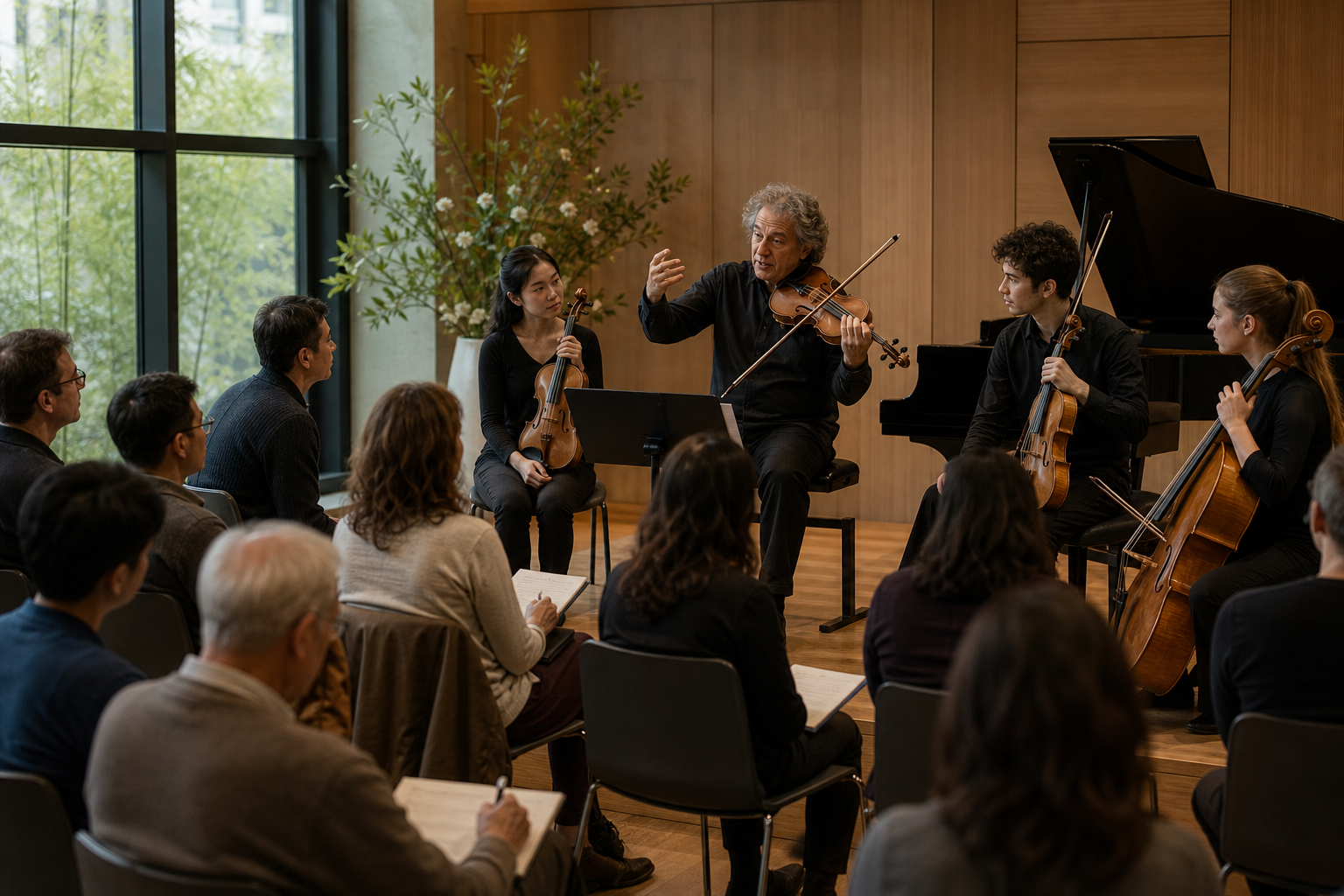
Why does Lincoln Center's Bruch weekend matter more than another standard concerto booking?
Because it puts violin in a slot that casual summer audiences can find without extra explanation. Lincoln Center's Summer for the City describes its season as a mix of free and choose-what-you-pay events built around movement, contemporary artistry, and international voices. Inside that frame, the July 17 and July 18 Hymn and Reformation program lists Chloé Van Soeterstède conducting the Festival Orchestra of Lincoln Center, Simone Lamsma as soloist in Bruch's First Violin Concerto, and a full arc from Silvestrov's Hymn - 2001 to Mendelssohn's Reformation Symphony. Bruch is familiar repertoire, but that is exactly why the booking is useful news. In a festival environment crowded with dance, panels, film, and genre-mixed events, violin still gets a front-door statement rather than a dutiful side room. That is good programming discipline.
Tanya's performer take: standard repertoire still works when the context is sharp. Put a great violinist in a strong public slot, keep the ticket friction low, and the concerto stops feeling museum-like and starts feeling present again.
Can crossover string storytelling stay serious without turning into branding theater?
Yes, and the Guardian's July 3 review of Seasonal Quartet: Ali Smith and New European Ensemble is a good example. The report describes a Spitalfields Festival performance that paired live readings by Ali Smith with four new commissions by Kate Moore, Alice Yeung, Seung-Won Oh, and Sara Zamboni, then notes that the project travels to the Edinburgh Book Festival on August 28. What matters here is not literary prestige by itself. It is that string-led contemporary performance was given a clear story, a clear audience hook, and actual musical substance. For crossover artists and content creators, that is a better lesson than another vague promise to make classical music relevant. Relevance is easier to feel when the concept is readable before the first note and still holds up once the playing starts.
Tanya's performer take: crossover works when the music is strong enough to survive the concept. If the frame helps people enter the room but the strings still carry the emotional weight, the project earns its place.
Is live AI accompaniment getting close enough for performers to care?
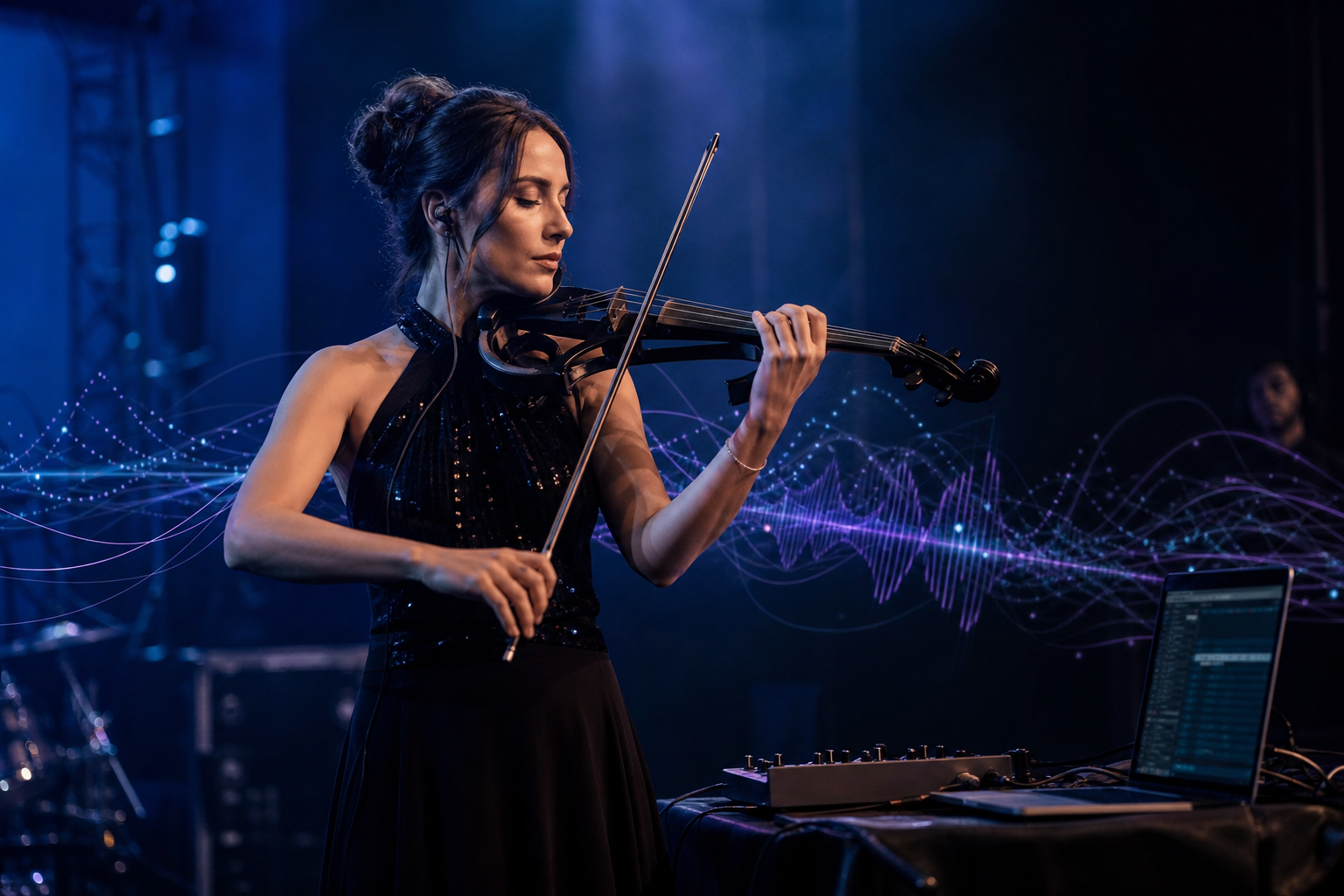
It is getting closer, especially when the research starts talking like stage people instead of only lab people. The June 10 arXiv paper Real-Time Language Model Jamming presents StreamMUSE as a system for synchronized accompaniment generation that responds to an external musical clock. The May 21 arXiv paper Live Music Diffusion Models goes further by arguing that interactive diffusion models can run locally on consumer hardware and even act like a generative delay in artist-AI collaboration. That does not mean tomorrow's violin set should depend on experimental AI. It does mean the conversation has moved beyond generic future-talk. Electric violinists, hybrid performers, and ambitious event planners should start watching which tools can actually stay in time, survive latency, and add color without stealing control from the musician.
Tanya's performer take: I care about this only when it respects timing, touch, and repeatability. If a tool cannot follow the pulse and leave the performer in charge, it is still a demo, not stage gear.
What should violinists, electric violinists, presenters, and fans watch next?
- Watch which festivals keep violin teaching and violin performance in the public frame at the same time.
- Track big-city summer programs that give violin a clear main-stage slot instead of treating it as cultural homework.
- Notice crossover projects that explain themselves quickly but still win on musical quality once the concept fades.
- Follow live-AI tools only if they solve timing, control, and stage repeatability for real performers.