News · 2026-07-10
Violin News Roundup: Ravinia's New Hunter Pavilion, Harmonium's Violin-First Launch, and Sueye Park's Recording Signal
As of Friday, July 10, 2026, the clearest violin story is that infrastructure, programming, and recording strategy are all being tested in public at once. The Associated Press reported today that Ravinia's Hunter Pavilion has reopened after a major rebuild, while Ravinia's official site is already selling a July 11 grand opening night. Also today, the San Antonio Express-News added new weight to Harmonium of Texas' first season, and on July 9 the Guardian made a useful case for why Sueye Park's new album stands out now.
Follow Tanya Strings on Google
Add the site as a preferred source to see more new violin posts from Tanya Strings in Google.
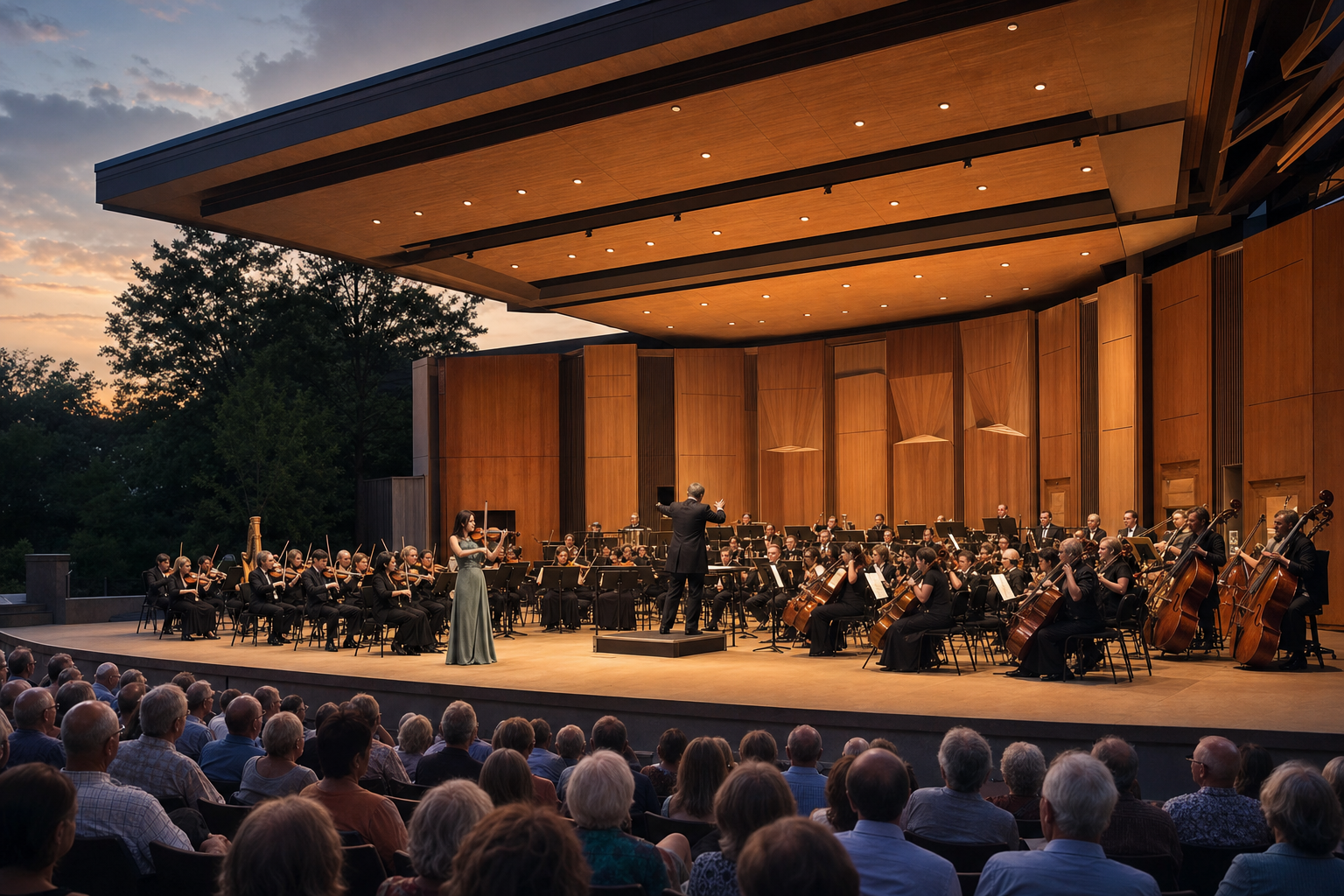
What does Ravinia's new Hunter Pavilion change for violin-led live music?
It changes more than optics. According to the AP's July 10 report, Ravinia reopened Hunter Pavilion after a $70 million renovation that cut capacity from 3,350 to 2,840, widened the seats for ADA compliance, improved ventilation, added LED lighting to reduce stage heat, and introduced adjustable stage panels and walls shaped with acoustical input from musicians. On the practical side, those are not luxury details. They affect bow control, intonation confidence, and how consistently a solo string sound reaches the audience in a big summer venue. Ravinia's own homepage adds immediate context: the festival is framing the rebuilt space as the center of a 90-plus-concert season, and the official July 11 grand opening night pairs Marin Alsop and Yunchan Lim with a special guest appearance by Lizzo. That crossover scale matters. A violin-friendly acoustic shell inside a venue that serves classical, pop, and broader public events is exactly the kind of infrastructure shift performers and planners should watch closely.
Tanya's performer take: violinists do not only need prestige venues. We need rooms that let subtle phrasing travel without turning the set into a fight for clarity. Better airflow, lower stage heat, and smarter acoustic surfaces can change the quality of a live performance before the first note.
Why is Harmonium of Texas already interesting for violinists and presenters?
Because it is building identity fast instead of waiting a few seasons to become legible. On its official 2026-27 season page, Harmonium of Texas describes itself as a new orchestra for San Antonio with a season that already leans visibly toward violin and artist personality. Opening weekend on October 2, 2026 centers Tessa Lark in Michael Torke's Sky before Carmina Burana. The same official calendar later lists Nancy Zhou in Bach and Juan Pablo Contreras on February 13-14, 2027, and Joshua Bell on April 4, 2027. Today's Express-News report adds another public signal: Yo-Yo Ma has now been added to the debut season, and the organization says it is launching an initiative to support young Latino composers for season two. That combination matters for event planners. It says the institution wants headline artists, but it also wants a local cultural story and a pipeline. For violinists and creators, this is a useful reminder that a new orchestra breaks through when the artistic profile is readable immediately, not when the branding deck says the mission is broad.
Tanya's performer take: this is the sharper way to launch. Put serious string players in the public frame early, connect them to a real community story, and give audiences one clear reason to remember the season beyond generic prestige.
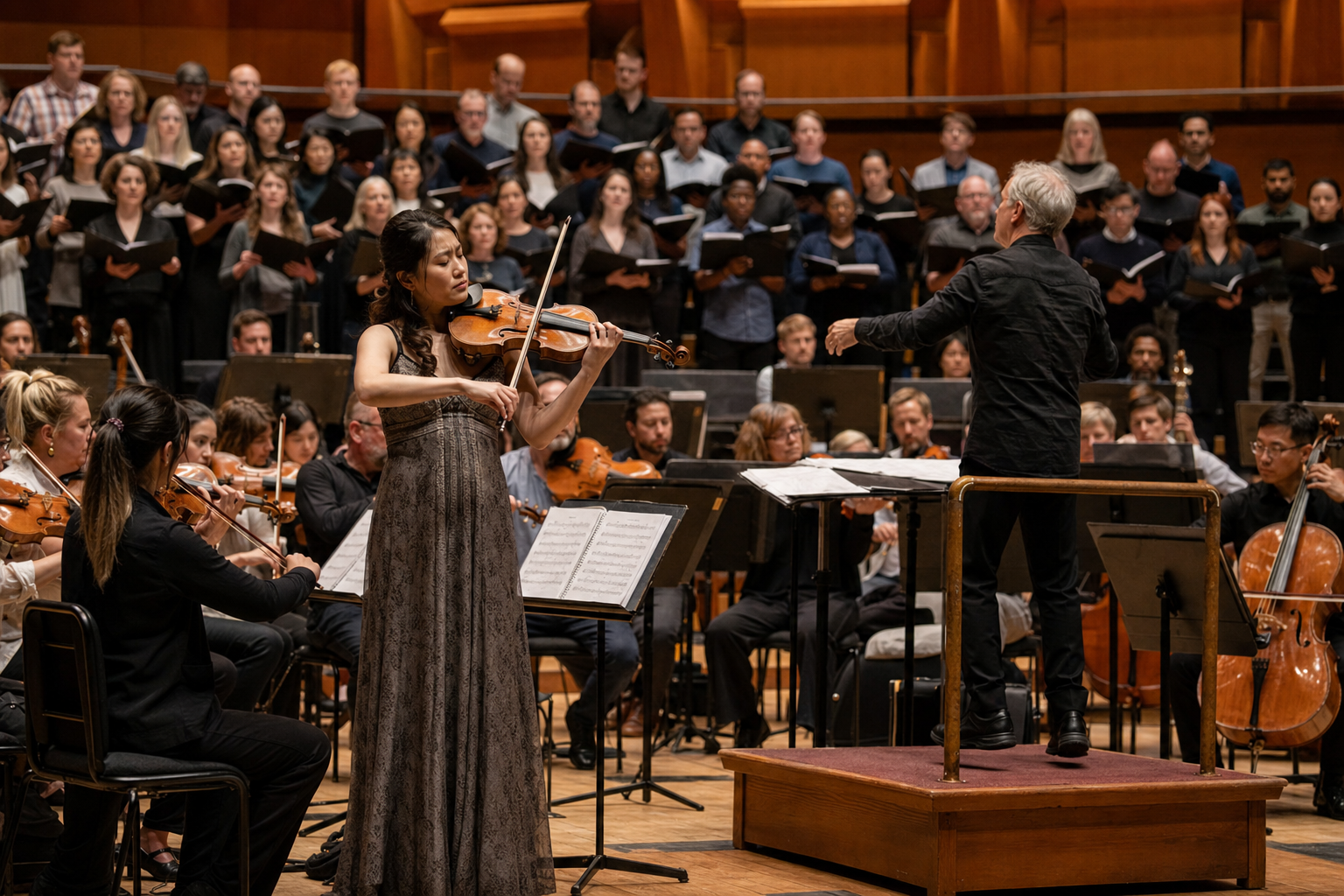
What does Sueye Park's new Goldmark and Sibelius release say about recording strategy now?
It says recordings travel further when the repertoire argument is visible on the page, not only in the press copy after release day. In the Guardian's July 9 review, Sueye Park's album pairs Karl Goldmark's Violin Concerto with Sibelius miniatures, backed by the Rundfunk-Sinfonieorchester Berlin under Valentin Egel. The review presents the Goldmark as a relative rarity that still holds attention when it is played with line, patience, and tonal focus, and it notes that Park makes her BBC Proms debut on July 21. That last point matters because the album is not floating by itself. It sits inside a wider artist moment. For violinists, this is a better model than another standard-concerto recycling exercise. For music fans, it offers a way into a concerto that many people do not hear live often. For content creators, it proves something equally important: thoughtful programming is still marketable when it is framed with confidence rather than apology.
Tanya's performer take: a recording does not need gimmicks if the concept is strong. When the repertoire pairing says something clear about taste and identity, the audience can feel why this release had to happen now.
What should violinists, presenters, and music fans watch next?
- Watch whether more summer venues invest in acoustic and backstage details that directly improve the experience for string players, not just the audience photo.
- Track new orchestras that make violin part of their opening identity, because those groups are often clearer about who they want to serve.
- Notice which album releases frame a repertoire idea before they ask for attention, because that is where classical recording still feels alive.
- The July 10 lesson is direct: violin wins when the room, the institution, and the artistic concept all become easier to read at first contact.