Power · 2026-07-06
Best Portable Power Stations for Electric Violinists Playing Outdoor Gigs
The best portable power station for most electric violinists playing outdoor gigs is the EcoFlow RIVER 2 Max because it gives Tanya Strings enough real runtime and inverter headroom to power a practical show setup without turning the rig into luggage. If you need a lighter first buy, Jackery Explorer 300 Plus is the smarter travel option. Anker SOLIX C300 is excellent for compact pop-up rigs with more outlet flexibility, Bluetti EB3A is the best budget-value move, and Goal Zero Yeti 500 is the premium outdoor-ready pick. Buy by total rig draw, runtime, and how much AC gear your set actually carries.
Follow Tanya Strings on Google
Add the site as a preferred source to see more new violin posts from Tanya Strings in Google.
Affiliate disclosure: Some links in this article are affiliate links. I may earn a commission if you make a purchase, at no extra cost to you.
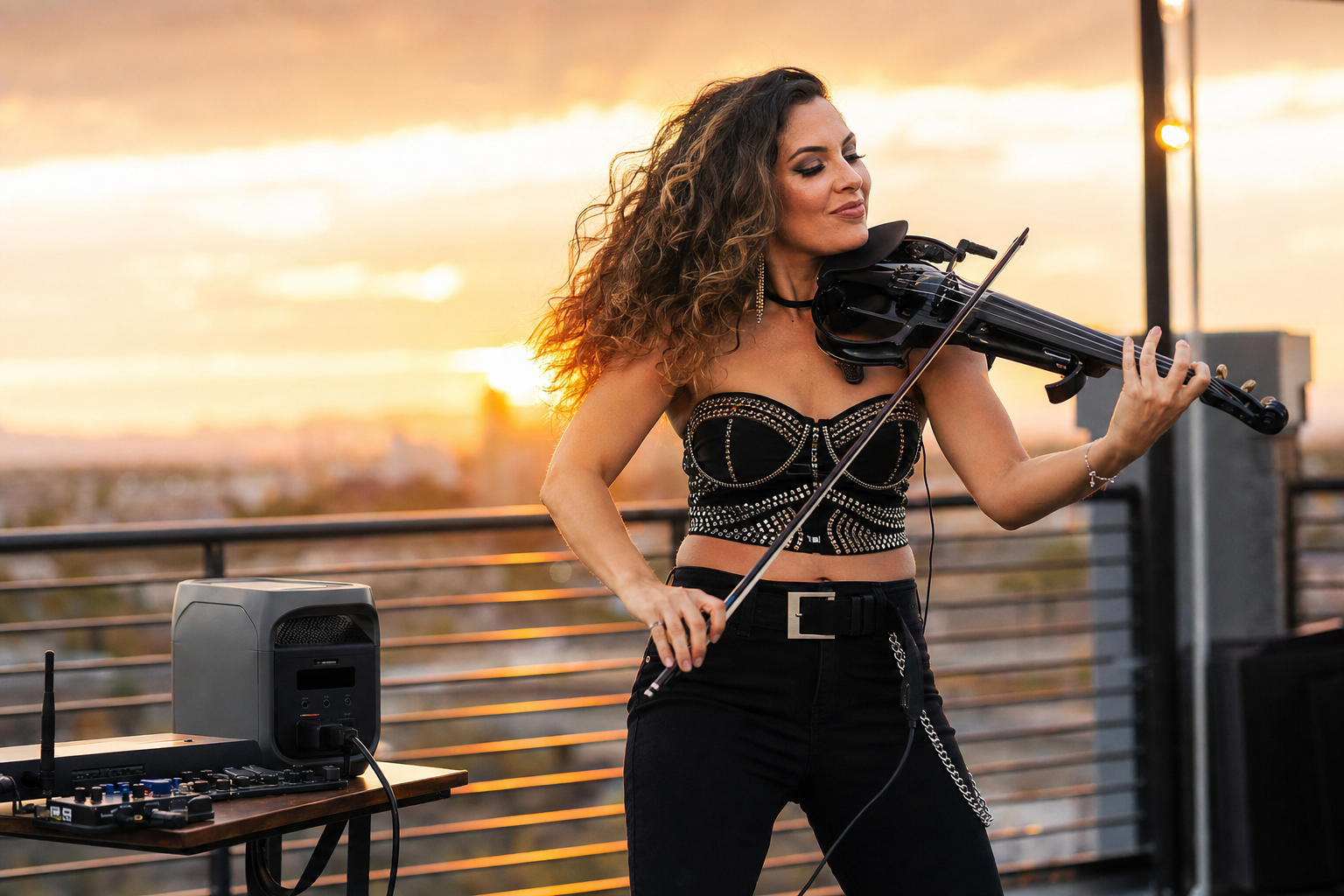
What is the best portable power station for most electric violinists?
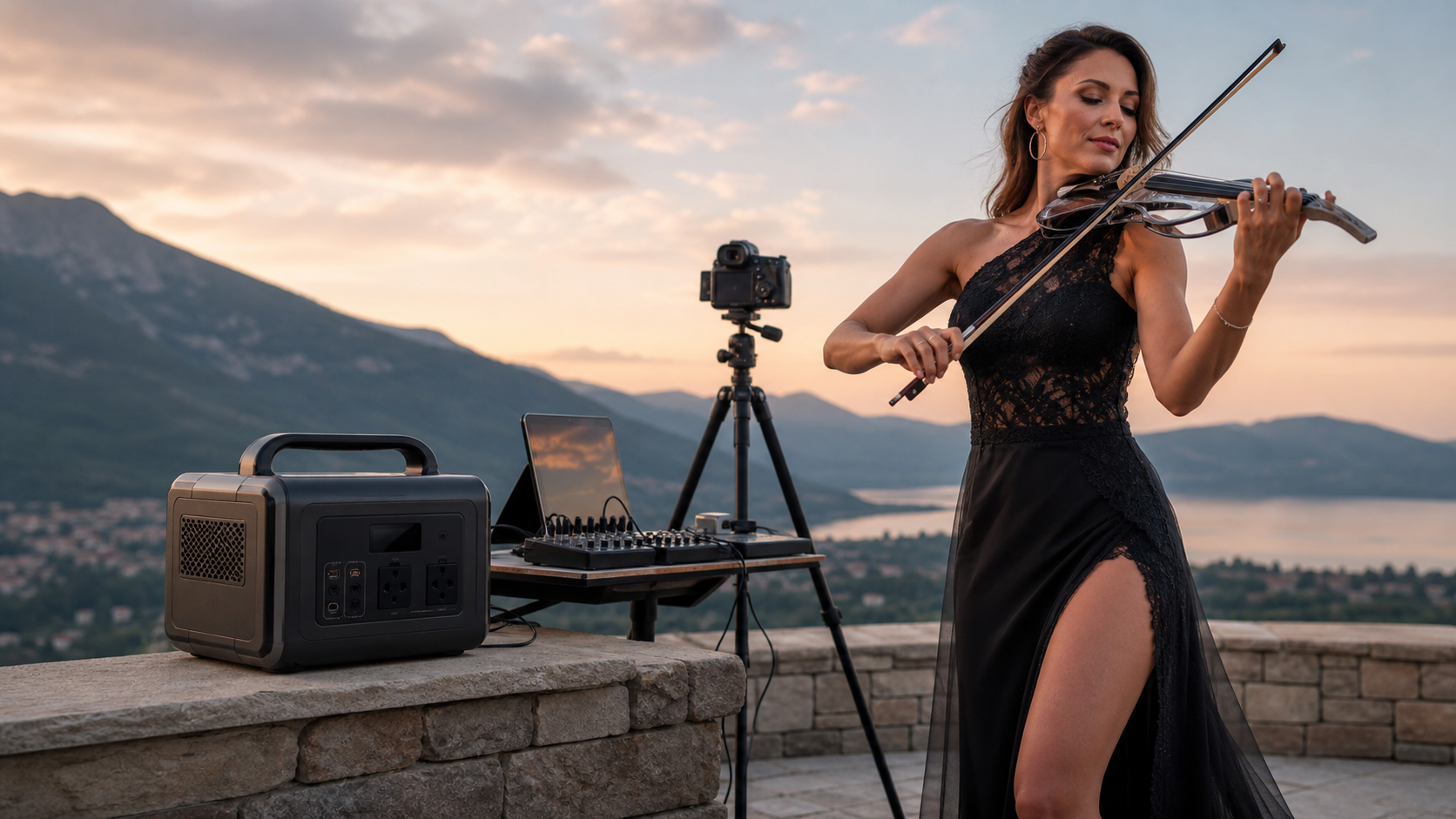
For most working electric violinists, I would start with the EcoFlow RIVER 2 Max. EcoFlow positions it as a 512Wh, 500W portable power station, and that is the right middle ground for how outdoor violin rigs really behave. Tanya Strings may need to power a compact mixer, wireless receiver, tablet, laptop charger, or a few pedals on top of the violin signal path. A tiny emergency battery can feel clever until the set gets longer, the heat rises, or the video team wants another take. RIVER 2 Max gives enough headroom to stay useful without jumping to a box that feels more like festival infrastructure than musician luggage.
My performer rule: buy the power station for the whole show system, not just the instrument cable that happens to start the signal chain.
Which portable power stations are worth buying right now?
This shortlist stays focused on electric violin reality: outdoor ceremonies, compact live rigs, backing tracks, creator shoots, and load-ins where wall power is unreliable or missing.
| Product | Best for | Why Tanya would use it | Watch out for | Links |
|---|---|---|---|---|
| EcoFlow RIVER 2 Max | Most electric violinists who want the safest all-around outdoor power choice | I trust it when I need believable runtime and enough AC headroom for violin, tracks, wireless, and a small mixer without dragging a huge battery box to the venue. | It is larger than the 288Wh class, so do not buy it if your whole rig is only a phone, one pedal, and wishful thinking. | Official · Amazon |
| Jackery Explorer 300 Plus | Fly dates, weddings, and lighter rigs that need a simple first power station | I would buy it when I want a lighter bag, straightforward charging, and enough reserve for a disciplined violin, tablet, and pedal workflow. | Its smaller battery is easier to outgrow if the set becomes video-heavy or starts leaning on more AC gear. | Official · Amazon |
| Anker SOLIX C300 | Compact pop-up rigs that want more outlet flexibility in a very small footprint | I like it when I want several AC outlets, multiple USB-C paths, and a box that feels more creator-friendly than single-outlet travel batteries. | It still lives in the compact class, so the convenience is the reason to buy it, not marathon runtime. | Review · Amazon |
| Bluetti EB3A | Budget-minded players who still need real AC output for small outdoor shows | I would choose it when the budget matters but I still want more serious inverter confidence than a glorified USB battery pack can offer. | It is a value play, so buy it for small-rig discipline rather than expecting large-show endurance. | Official · Amazon |
| Goal Zero Yeti 500 | Premium outdoor work where durability and weather confidence matter more | I would move here when the show is exposed, the setup needs more confidence, and I want a tougher premium box instead of the cheapest watt-hours possible. | It is a more expensive decision, so make it only when the outdoor workload is already real. | Review · Amazon |
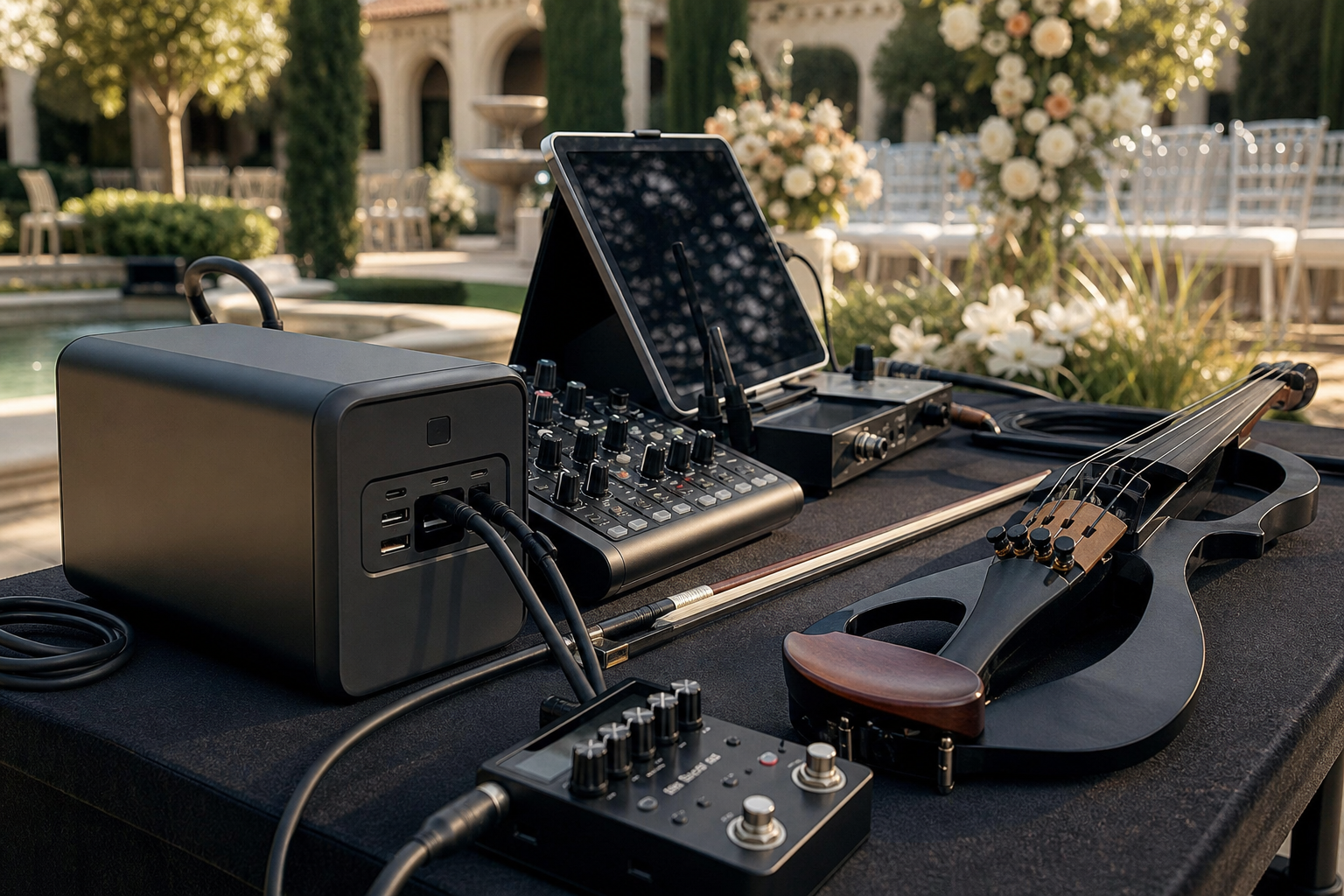
How much power does an outdoor electric violin rig actually need?
The violin itself does not draw power, but almost everything that makes a modern electric violin show feel professional does. Wireless systems, pedalboard supplies, tablets, laptops, compact mixers, cameras, and interface-style creator tools all add up. A very disciplined violin rig may live comfortably in the 30W to 90W range. Add a laptop charger, a small mixer, or content gear and you can move toward 100W to 150W quickly. If you expect to run a powered speaker from the same box, the calculation changes fast, and that is where a small travel unit can stop being the smart answer.
- Think in systems: count every charger, mixer, receiver, and screen that needs power, not just the violin path.
- Check AC output first: if the inverter cannot handle the draw, the battery size does not save you.
- Treat runtime honestly: a two-hour set day usually includes setup, waiting, soundcheck, and encore-level margin.
- Be careful with speakers: a battery-powered speaker is often smarter than forcing one small power station to do everything.
Why is EcoFlow RIVER 2 Max my safest overall pick?
RIVER 2 Max makes sense because it lands where many real outdoor violin setups live. EcoFlow positions it as a 512Wh unit with 500W output and fast recharging. That means Tanya Strings can use it for violin, backing tracks, wireless, compact mixer duties, and creator extras without feeling like every extra cable is a battery crisis. It is also small enough to travel without becoming the heaviest thing in the load-out. I like gear that reduces mental noise before the first note. RIVER 2 Max does that better than most smaller boxes because it leaves more room for mistakes, weather delays, and one more take on camera.
Who should buy EcoFlow RIVER 2 Max first?
Buy it first if your outdoor work regularly mixes live violin, playback, and small-crew creator workflow, and you want one believable all-around answer instead of a barely-enough workaround.
- Pros: strong middle-ground runtime, useful AC headroom, fast charging, and a realistic fit for mixed performance and creator jobs.
- Cons: larger than the lightest travel options and still not the right box for powering a bigger PA all evening.
See the official EcoFlow RIVER 2 Max page · Find EcoFlow RIVER 2 Max options on Amazon
When should you buy Jackery Explorer 300 Plus instead?
Jackery Explorer 300 Plus is the smarter move when weight, simplicity, and fast packing matter more than maximum runtime. Jackery positions it as a 288Wh, 300W portable power station, and that smaller class is still enough for a focused electric violin rig. I would look here for ceremonies, lighter duo-style setups, travel dates, or backup power where the goal is violin plus tablet plus a few supporting devices, not a full outdoor production hub. This is the station I would rather carry when the venue access is annoying and I already know the rig will stay disciplined.
What is the real reason to choose Jackery over a larger box?
You choose it because the bag gets lighter and the setup gets quicker, not because you think a small battery will magically behave like a larger one once the gig expands.
- Pros: lighter travel logic, straightforward setup, and enough power for smaller violin-centered outdoor rigs.
- Cons: less runtime margin and less forgiveness once laptops, extra AC gear, or longer sets pile on.
See the official Jackery Explorer 300 Plus page · Find Jackery Explorer 300 Plus options on Amazon
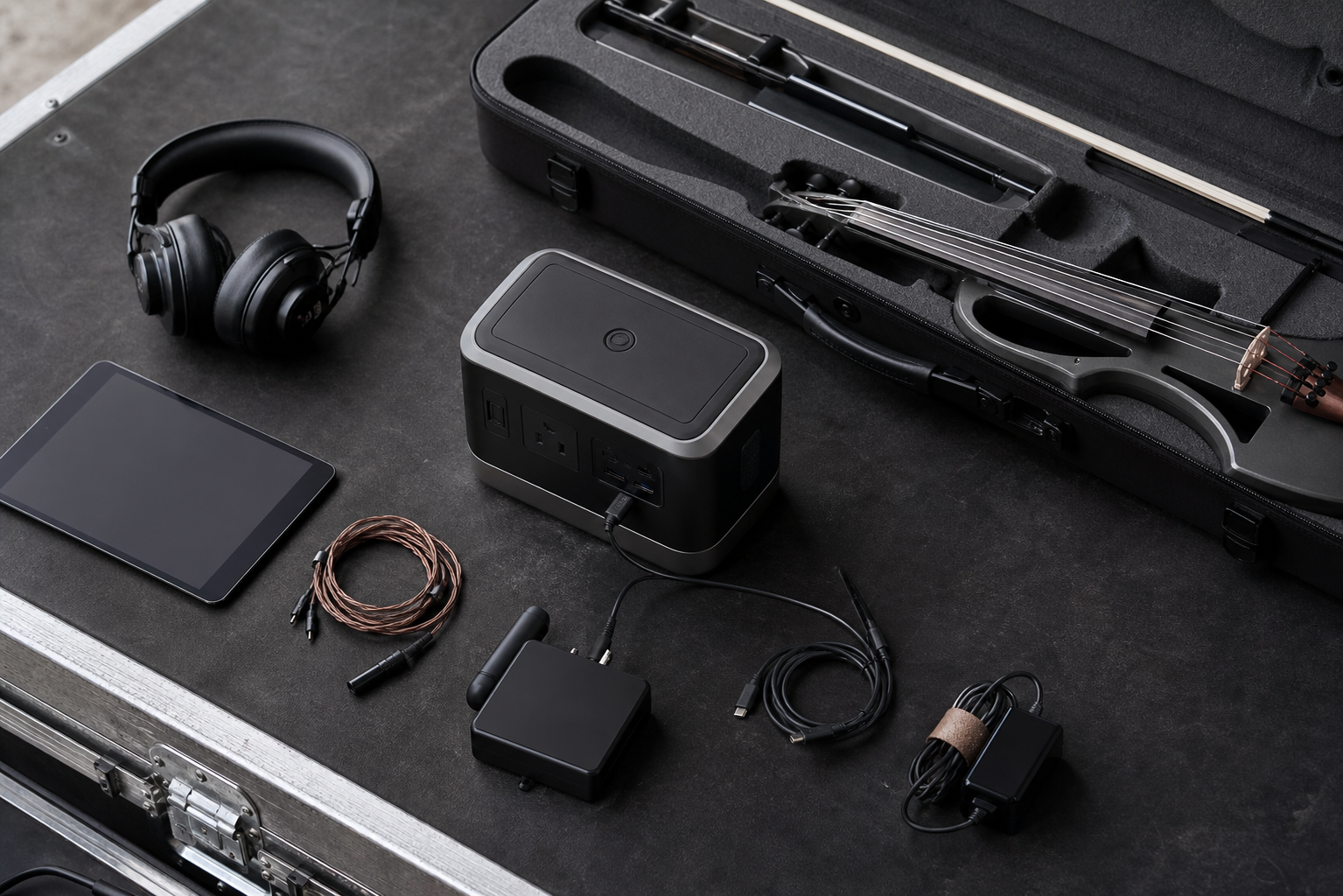
Why would Tanya Strings pick Anker SOLIX C300 for fast pop-up shows?
Anker SOLIX C300 is attractive because it pushes a lot of convenience into a compact box. Current reviews highlight a roughly 288Wh class battery, several AC outlets, multiple USB-C ports, and a compact design around the 9-pound range. That mix matters for Tanya Strings when the outdoor job looks half like a live set and half like a creator shoot. I may need a tablet, camera battery charging, a mixer, and one or two AC pieces without carrying a much bigger station. C300 is less about huge endurance and more about giving a small rig better connection options without turning the setup into a cable compromise.
Who gets the most value from the Anker layout?
Performers and content creators who want one small station to cover more outlet types, quicker pop-up setups, and fast transitions between playing and filming.
- Pros: compact footprint, strong outlet variety, creator-friendly connectivity, and excellent fit for pop-up outdoor workflows.
- Cons: still a compact battery class, so runtime remains the tradeoff for the convenience and size.
Read The Verge review of the Anker SOLIX C300 · Find Anker SOLIX C300 options on Amazon
Is Bluetti EB3A the smartest budget choice?
Bluetti EB3A is the budget pick I would take seriously because it still behaves like a real power station instead of a dressed-up charging brick. Bluetti positions it as a 268Wh unit with 600W total output, and that is enough to make a compact electric violin rig believable when the spending limit is real. I would buy it when the job is small, the outdoor dates are occasional, and I still want AC confidence for a mixer or charger that a basic USB battery cannot handle. It is a smart value move if you are honest about the scale of the show.
When does EB3A make more sense than Jackery?
It makes more sense when AC output matters more than shaving every possible pound, or when you want more budget-friendly entry into small-rig off-grid power.
- Pros: strong value, convincing AC output for the size, and a practical entry point for smaller outdoor electric violin rigs.
- Cons: modest battery size and less premium feel once the workflow becomes frequent or more demanding.
See the official Bluetti EB3A page · Find Bluetti EB3A options on Amazon
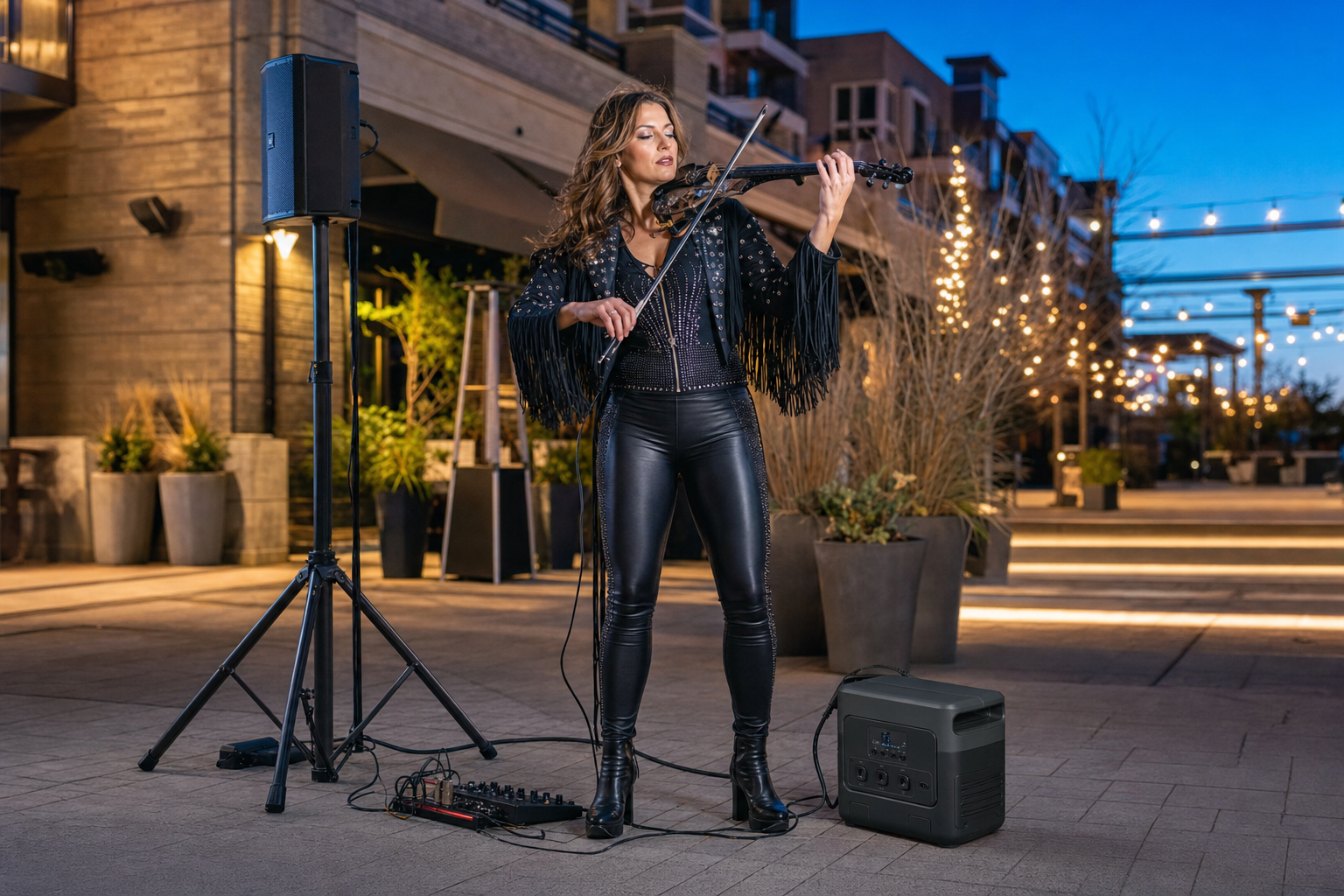
Who should pay more for Goal Zero Yeti 500?
Goal Zero Yeti 500 is the premium answer for artists who already know outdoor reliability is part of the business. Recent coverage highlights a 499Wh battery, 500W inverter with higher surge tolerance, IPX4 water resistance, and a LiFePO4 platform designed for long cycle life. That is a stronger weather-and-durability story than many lighter lifestyle-focused boxes. Tanya Strings would pay for it when outdoor ceremonies, exposed terraces, or travel-heavy creator jobs happen often enough that the power station has to feel like serious working infrastructure. This is not the cheapest watt-hour play. It is the calmer professional choice when the environment gets less forgiving.
What are you really paying extra for with Goal Zero?
You are paying for better outdoor confidence, stronger premium build logic, and less anxiety about whether a lightly built consumer box is the weak point in the whole job.
- Pros: stronger durability story, weather resistance, good headroom for mixed rigs, and premium long-term confidence.
- Cons: higher price and less reason to stretch for it if the outdoor calendar is still occasional.
Read the Goal Zero Yeti 500 review · Find Goal Zero Yeti 500 options on Amazon
What should you avoid when buying a portable power station?
- Do not buy by watt-hours alone: AC output decides whether the box can run your real gear in the first place.
- Do not ignore the whole runtime day: setup, waiting, rehearsing, and second takes all drain the battery before the headline moment.
- Do not assume one small station should run a full PA: speaker-heavy plans often need a bigger unit or a speaker with its own battery.
- Do not forget charging habits: the best power station still fails if you arrive with it half full and no adapter discipline.
- Do not overbuy camping features you will never use: Tanya Strings needs stage reliability and creator readiness, not wilderness cosplay.
Do you need a portable power station if you already own a battery-powered PA speaker?
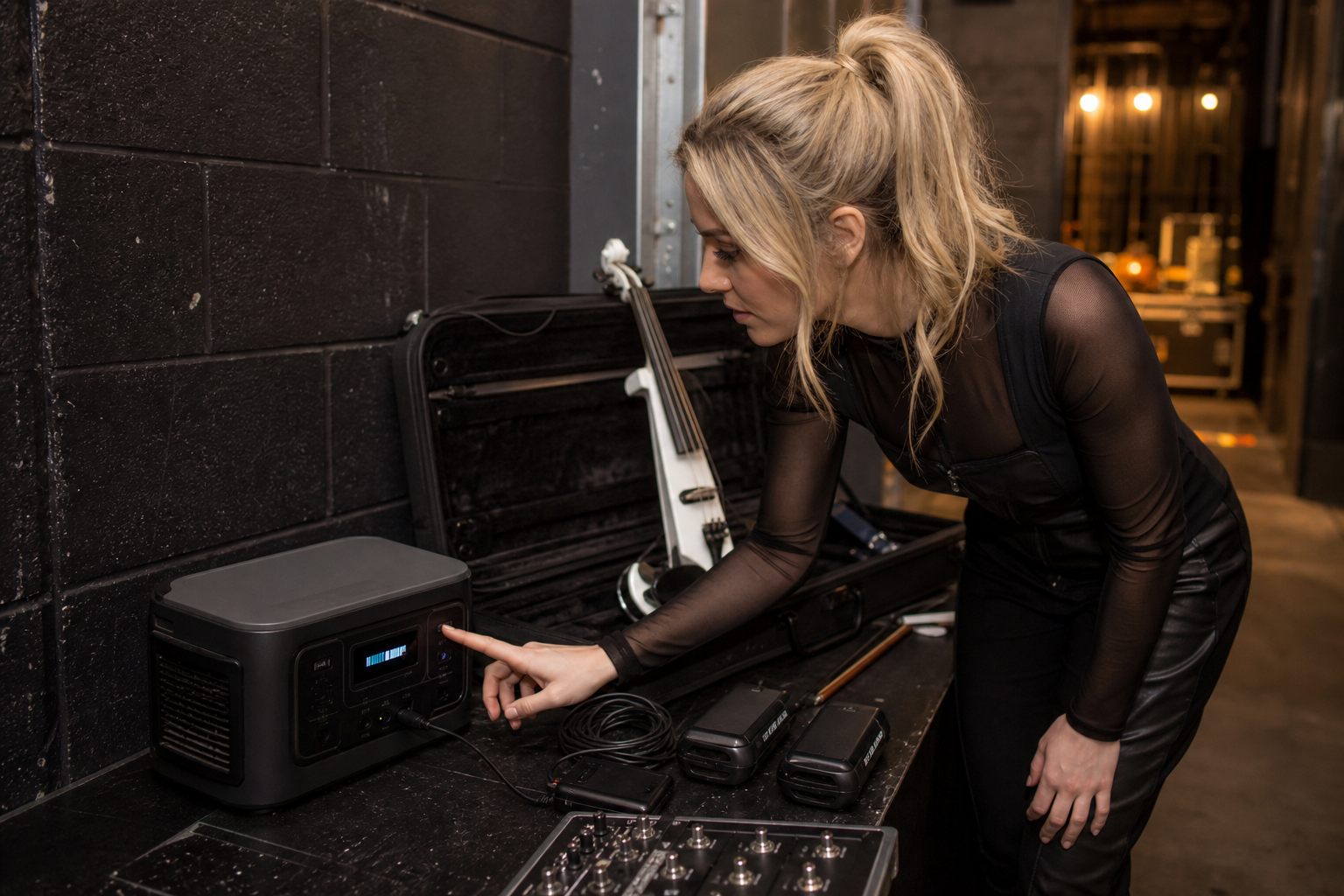
Sometimes yes, sometimes no. If the speaker already covers your exact small-show use case and the rest of the rig is minimal, adding a separate power station can be unnecessary. But many electric violin setups now include tablet playback, wireless, creator tools, or a compact mixer that still benefit from their own power source. I think of the power station as the part that stabilizes everything around the speaker. When the show is bigger than one powered box, that stability becomes useful very quickly.
My buying order: buy a portable power station after you know the outdoor workflow is recurring and after you know exactly which devices keep causing friction away from wall power.
FAQ
What is the best portable power station for most electric violinists?
For most performers, EcoFlow RIVER 2 Max is the safest all-around answer because it balances runtime, output, and portability well enough for a real outdoor violin workflow.
Is 300Wh enough for electric violin, pedals, and backing tracks?
Usually yes, if the rig is disciplined and you are not also trying to run a powered speaker for a long set. It is a safer fit for smaller ceremonies and travel days than for heavier production work.
Can a portable power station run a powered speaker?
Sometimes, but speaker draw can eat battery and inverter headroom fast. I would plan that very carefully instead of assuming any small station will handle it comfortably.
What matters more, watt-hours or AC output?
AC output matters first because it determines whether your gear can turn on and stay stable. Watt-hours matter next because they decide how long the system can keep working.