News · 2026-06-27
Violin News Roundup: Aspen's Screen Upgrade, Grant Park's Free Pride Weekend, and Caramoor's String-Led Crossover
As of Saturday, June 27, 2026, the most useful violin news is about presentation, not just repertory. The Grant Park Music Festival is closing June with free June 26 and 27 performances of Tchaikovsky's Piano Concerto No. 1 in a Pride-framed program under Edwin Outwater. Caramoor follows on June 28 with The Knights and Conrad Tao in a violin-forward American set that includes Jessie Montgomery, Christina Courtin, Gershwin, and Colin Jacobsen. Aspen Music Festival and School starts July 1, while its new video screens plan points to a more camera-aware summer experience.
Follow Tanya Strings on Google
Add the site as a preferred source to see more new violin posts from Tanya Strings in Google.
Why does Grant Park's free late-June weekend matter to violin audiences?
Because it is a reminder that scale and access can still live in the same sentence. Grant Park's official event page frames the June 26 and June 27 concerts around Tchaikovsky's First Piano Concerto, with conductor Edwin Outwater, pianist Sara Davis Buechner, and a wider program including Jimmy Lopez, Lou Harrison, and Amy Woodforde-Finden. Just as important, the page makes the access model explicit: reserved upgrades exist, but all performances and open rehearsals are also free on a first-come, first-served basis. For violinists, event planners, and content creators, that matters. It keeps a major city-center classical event legible to the public instead of hiding it behind insider behavior.
Tanya's performer take: free entry is not a small detail. When a presenter removes friction, string players gain a bigger live ecosystem, a broader casual audience, and better odds that one strong appearance turns into repeat attendance.
What is Caramoor really signaling with The Knights and Conrad Tao?
It is signaling that crossover credibility works best when strings remain central rather than decorative. Caramoor's June 28 listing places The Knights and Conrad Tao inside the Venetian Theater with a program built around Rhapsody in Blue, but the more revealing detail is the surrounding repertoire. Jessie Montgomery's Rhapsody No. 2 for Solo Violin and Chamber Orchestra, Christina Courtin's rhapsody on being giant proof, Copland, and Margaret Bonds all sit in the same frame. The artist list also matters: Colin Jacobsen is credited on violin, Christina Courtin brings violin and vocals, and the ensemble describes itself as an adventurous orchestra built to reduce barriers between audiences and music. That is exactly the kind of current signal electric violinists should watch.
Tanya's performer take: this is the right kind of crossover. It is not classical music apologizing for itself. It is string-led programming expanding its reach without losing its musical center, which is where world-class electric violin performance can win real headline space.

Why is Aspen's new screen strategy more important than it sounds?
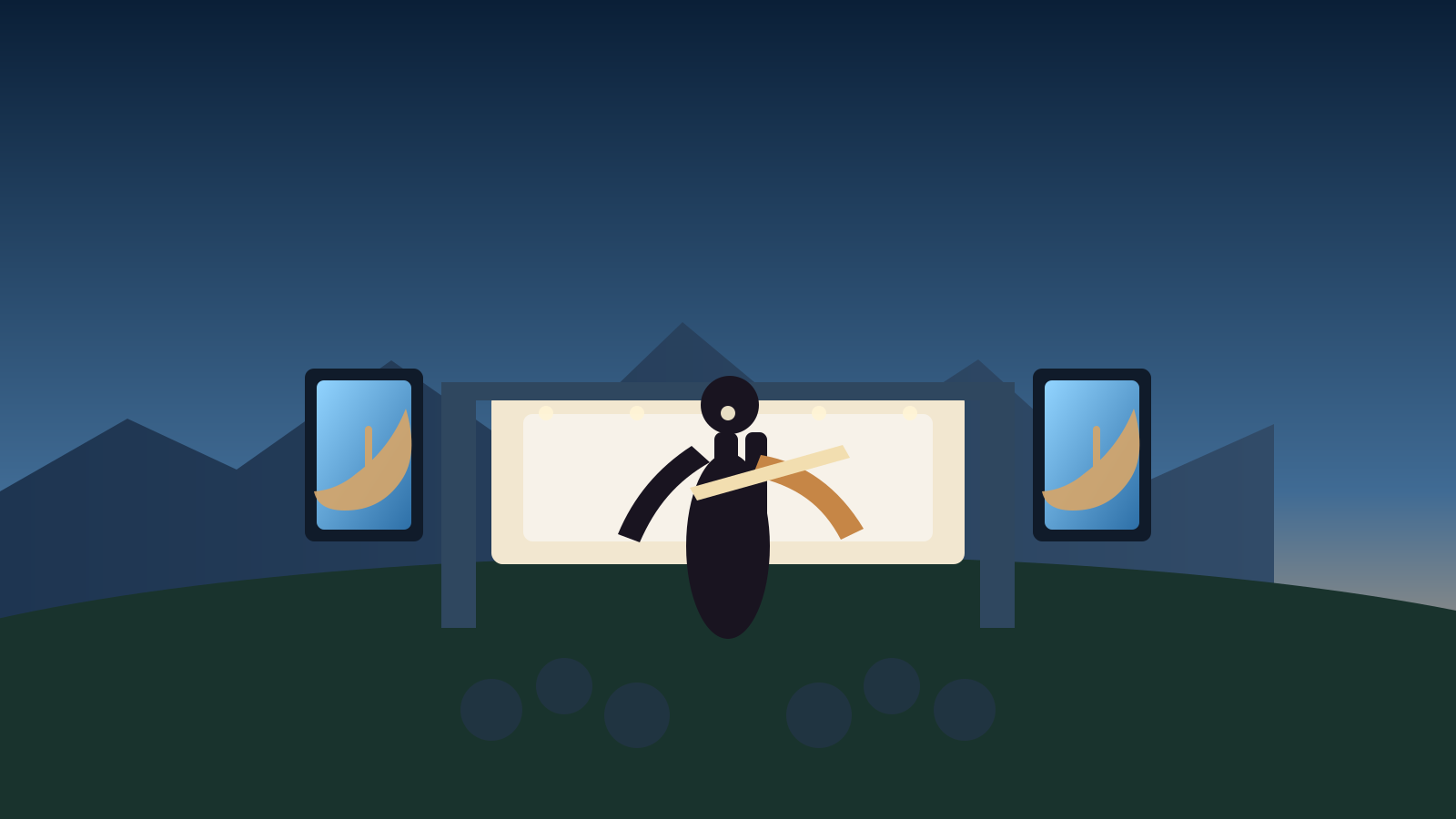
Because it treats visual storytelling as part of concert craft, not as an afterthought. Aspen's homepage says the 2026 season runs from July 1 to August 23 and that the season starts next week. Its dedicated screen update goes further: large LED screens will be added to either side of the Klein Music Tent stage for selected August concerts, and Aspen says a professional team will highlight performers' faces, fingers, interactions, and dramatic musical moments. It even notes that pianists' and violinists' hands will be a specific focus. For anyone building a premium live show in 2026, that is not trivial production gloss. It is a concrete sign that presenters understand how today's audience experiences virtuosity, detail, and stage intimacy.
Tanya's performer take: for a world-class electric violin act, camera language is now part of the instrument's market value. If the audience can see articulation, bow speed, and physical intent more clearly, the performance lands harder both in the room and across clips, press, and future ticket sales.
What should violinists, planners, and music fans watch next?
- Watch which summer presenters make access clear, because free or low-friction entry still grows the audience fastest.
- Track string-led crossover programs where violin is central to the concept, not just a texture layered on top.
- Pay attention to how venues package visual detail, since better concert imaging now affects artistic impact, press value, and post-show content life.
- For performers, the real late-June lesson is simple: strong playing still matters most, but strong framing now decides how far that playing travels.