Monitoring · 2026-06-11
Best In-Ear Monitors for Electric Violinists on Stage
The best in-ear monitors for most electric violinists are the ones that lock pitch center, bow detail, and backing-track timing in place without making the stage feel sharp or exhausting. I would start with Shure SE215 if you need a reliable first pair, look at Audio-Technica ATH-E50 if you want cleaner midrange focus, and consider Shure SE846 Gen 2 only if premium detail truly changes your show. On electric violin, the wrong IEM can blur intonation, exaggerate scratch, and push you into playing too hard. The right pair makes soundcheck calmer and performance more repeatable.
Follow Tanya Strings on Google
Add the site as a preferred source to see more new violin posts from Tanya Strings in Google.
Affiliate disclosure: Some links in this article are affiliate links. I may earn a commission if you make a purchase, at no extra cost to you.
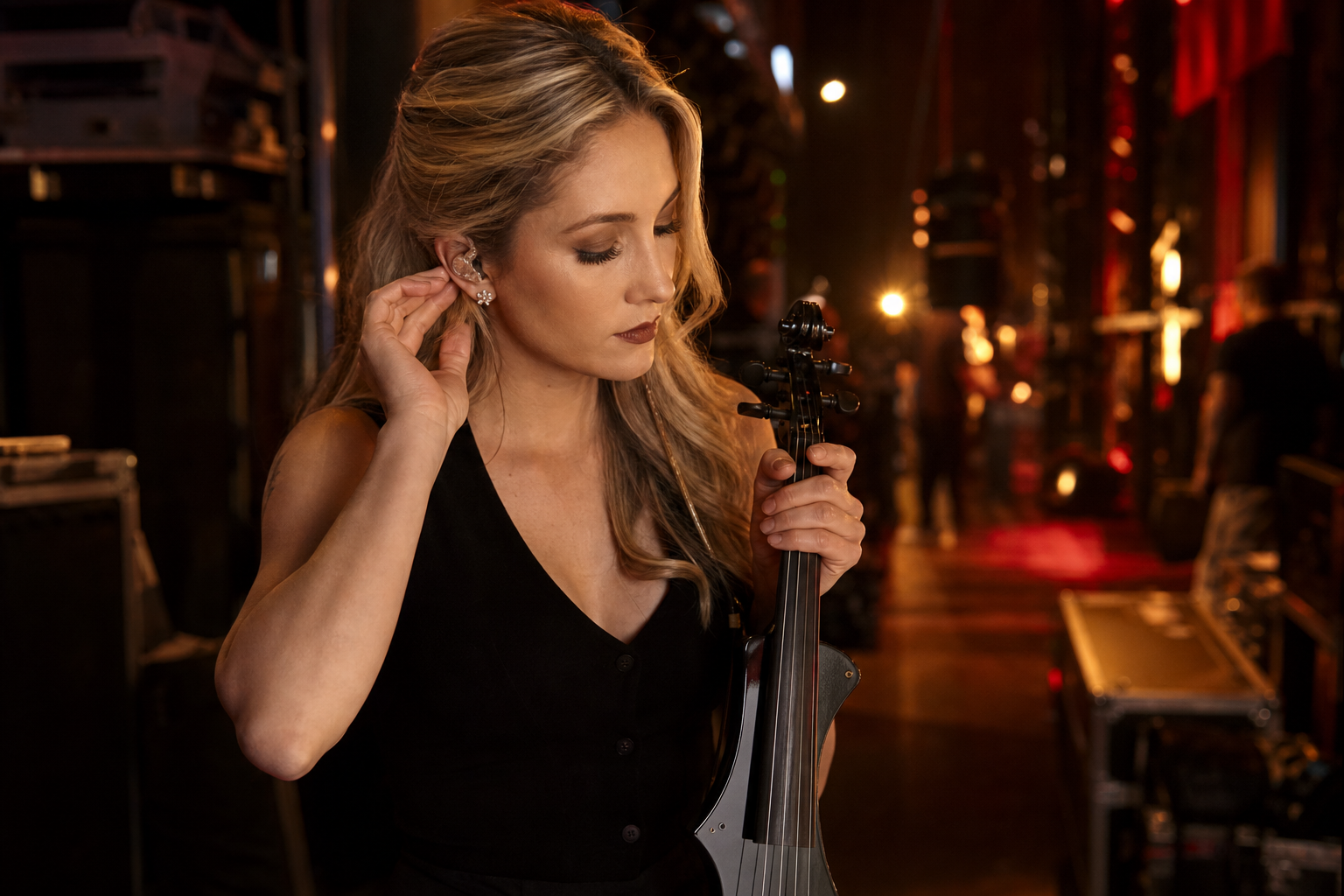
What makes an in-ear monitor good for electric violin on stage?
Electric violin sits in a difficult zone for monitoring. You need enough midrange honesty to hear pitch center, enough upper detail to judge articulation, and enough isolation to stop the room from fighting your ears. I do not buy stage IEMs for hype. I buy them for control. If the shell fits badly, the bass balance lies to you. If the tuning is too soft in the middle, your intonation work gets slower. If the top end is too sharp, you play with more tension than the music needs.
My performer rule: if I can hear pitch center, click or backing track, and bow attack at the same time, the monitor mix is ready.
Which in-ear monitors are worth buying right now for electric violin?
These are the pairs I would shortlist first for stage work, depending on budget, fit priority, and how much detail your show really needs.
| Product | Best for | Why Tanya would use it | Watch out for | Amazon link |
|---|---|---|---|---|
| Shure SE215 | First serious pair and dependable backup | It isolates well, stays comfortable, and gives a predictable stage upgrade from consumer earbuds. | It is musical and safe, but not the most revealing option for fine intonation detail. | Check on Amazon |
| Audio-Technica ATH-E40 | Value buy for fuller band mixes | The dual driver design gives weight and clarity without feeling cheap or flimsy on stage. | The fuller low end can tempt you to run more bass than electric violin really needs. | Check on Amazon |
| Audio-Technica ATH-E50 | Cleaner pitch center and focused midrange | I like it when I want less stage blur and a more disciplined reference for articulation. | It is less flattering than fun, which is exactly why some players will love it and others will not. | Check on Amazon |
| Shure SE846 Gen 2 | Premium touring detail and fit options | The adjustable voicing and high-end clarity make sense when the monitor mix is a real part of the show design. | Expensive, and easy to overspend on if the rest of the rig is still inconsistent. | Check on Amazon |
| Beyerdynamic DT 72 IE | Niche premium choice for detail addicts | It is appealing if you want a more analytical, midrange-aware listen for live lead lines. | Specialized tuning and price make it a serious-player purchase, not a default first buy. | Check on Amazon |
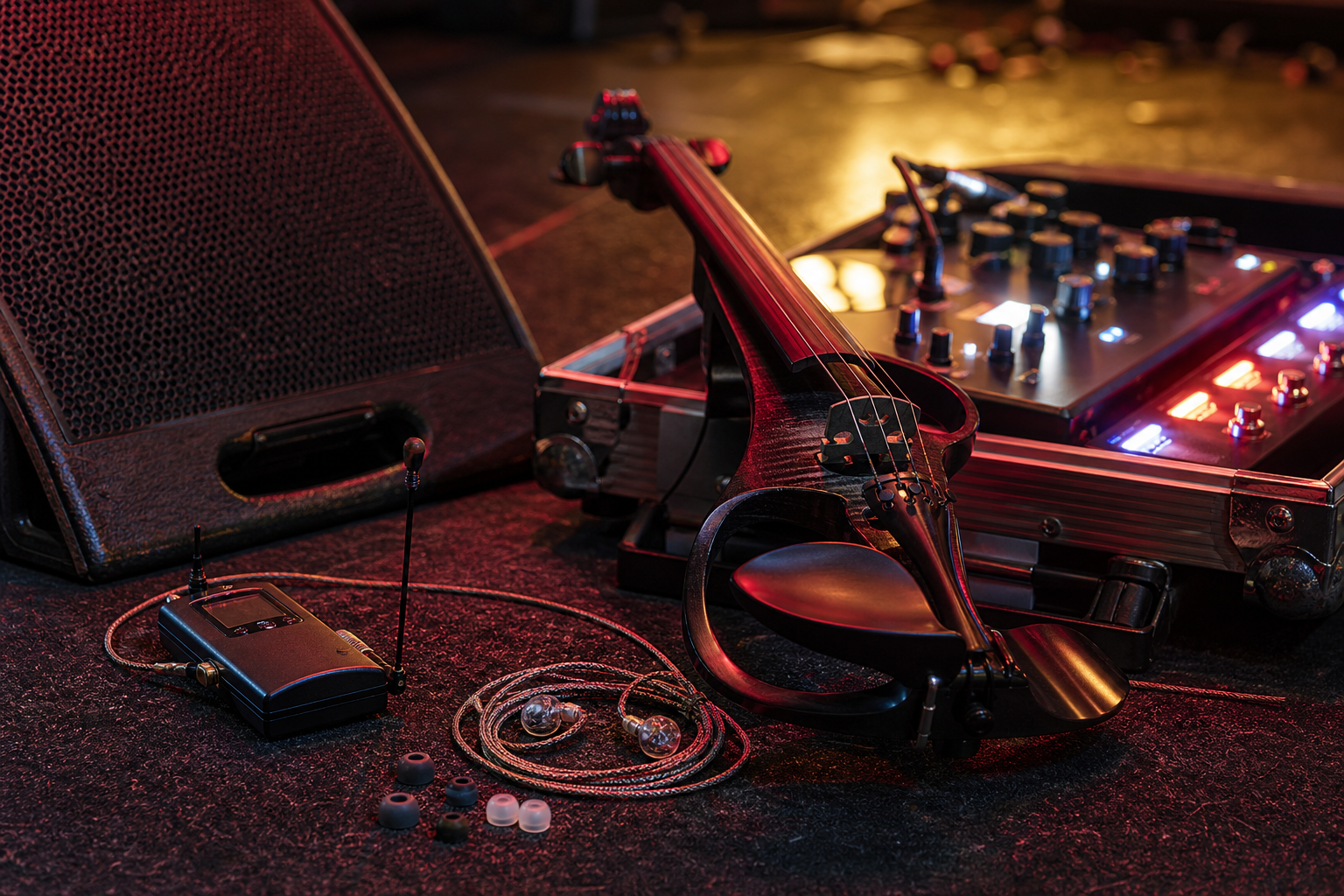
Should you start with a budget pair or jump to premium in-ear monitors?
Most players should start with a dependable wired pair before spending premium money. The biggest upgrade usually comes from moving out of random consumer earbuds and into real stage isolation with a secure over-ear fit. Once that step is done, then you can judge whether you need more detail, more comfort over longer sets, or a more refined midrange picture. Premium IEMs are worth it when you already know what is missing in your current live mix.
- Start lower: when you still need to learn your preferred ear tips, monitor level, and stage workflow.
- Move up later: when you are already performing regularly and can describe exactly what the current pair hides or exaggerates.
Why is Shure SE215 still the safest first buy for many performers?
The SE215 remains a very sensible first stage IEM because it solves the basic live problems cleanly. Shure positions it around clear sound, deep bass, a detachable cable, and a musician-style low-profile fit that blocks up to 37 dB of outside noise. For an electric violinist, that matters because the first win is often consistency, not perfection. I would rather hear a stable, familiar monitor picture every night than chase a more expensive pair before the rest of the rig is settled.
- Pros: dependable isolation, comfortable long wear, detachable cable, and an easy step up from everyday earbuds.
- Cons: the presentation is forgiving, so ultra-fine bow texture and pitch detail do not jump forward as much as on pricier options.
Find Shure SE215 options on Amazon
When does Audio-Technica ATH-E40 make more sense than the cheapest option?
The ATH-E40 is interesting when you want better monitoring authority without jumping straight into premium pricing. Audio-Technica markets its dual phase push-pull drivers as a monitoring-first design with strong accuracy, clarity, and maximum isolation. In practical use, that means a fuller and more planted stage feel than bargain models usually give. I would pick it for band sets where the groove needs some body and I still want the violin to stay present inside the mix.
- Pros: strong value, durable detachable cable, good isolation, and a fuller live feel than many entry models.
- Cons: if you already fight muddy monitor sends, the extra bass confidence can become too much of a good thing.
Find Audio-Technica ATH-E40 options on Amazon

Which model gives cleaner pitch center and less stage blur?
If your biggest problem is hearing the middle clearly enough to trust intonation under pressure, I would look at the ATH-E50 first. Audio-Technica describes it as a consistent reference model with strong isolation and an accurate full-range response from a balanced armature driver. That kind of tuning makes sense for electric violin because the instrument lives or dies in the middle. I want the note center, the attack, and the sustain line to feel organized before I ask for bigger lows or prettier sparkle.
Why does the ATH-E50 work well for controlled live detail?
I like the ATH-E50 for players who already know they do not need more bass hype. They need a calmer, more disciplined picture of what the instrument is actually doing in the mix.
- Pros: focused midrange, excellent isolation, and a more reference-style stage picture.
- Cons: it is less flattering than the SE215, so bad mixes sound bad faster.
Find Audio-Technica ATH-E50 options on Amazon
Is Shure SE846 Gen 2 worth premium money for electric violin?
It can be, but only when the rest of the performance chain is already strong. Shure pushes the SE846 Gen 2 as a four-driver design with a low-pass filter, up to 37 dB of isolation, and four selectable sound signatures. That is serious monitor hardware. I would care about it if the show relies on exposed solo lines, complex tracks, and repeatable detail night after night. I would not buy it just to rescue weak soundcheck habits.
- Pros: premium clarity, adjustable voicing, high isolation, and a fit kit that supports longer professional use.
- Cons: expensive, and the return on that money drops fast if your mixer, pack, or engineer workflow is still shaky.
Find Shure SE846 Gen 2 options on Amazon
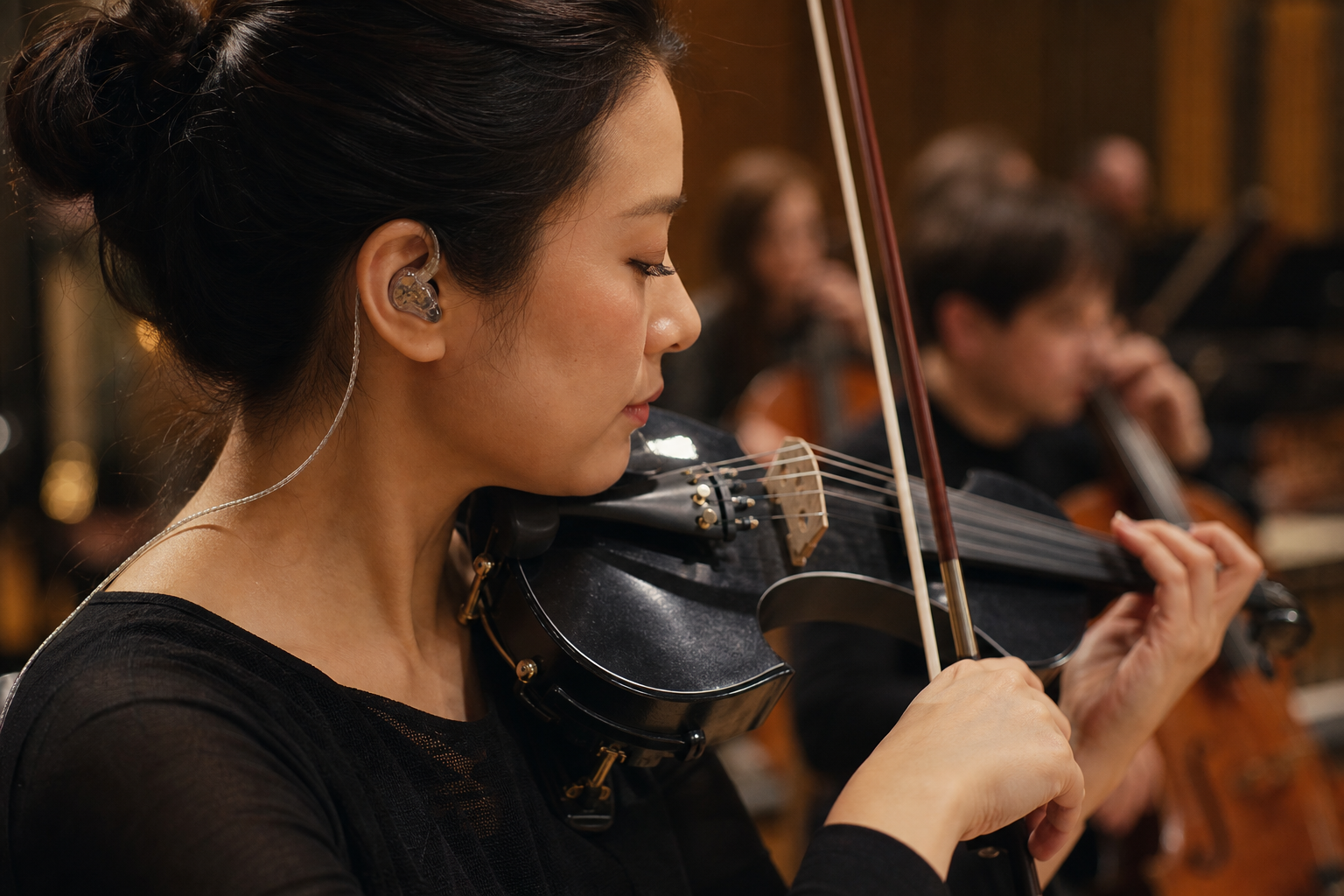
Is Beyerdynamic DT 72 IE too specialized for most electric violinists?
For many players, yes. For some players, that specialization is exactly the appeal. Recent review coverage around the DT 72 IE focused on midrange clarity, analytical detail, and a tuning aimed at singers and guitarists. That is not the same thing as saying it was built for violin, but it does make it interesting for a performer who wants lead information to stay very exposed in the ear. I would treat it as a deliberate taste purchase, not a universal recommendation.
- Pros: detailed, focused, and attractive if you prefer a more surgical stage picture.
- Cons: premium pricing and a narrower tuning personality than the safer all-rounder choices above.
Find Beyerdynamic DT 72 IE options on Amazon
What fit and ear-tip choices matter before you blame the mix?
Fit changes everything. A poor seal can make a good IEM sound thin, harsh, or strangely weak in the low end. Before replacing the earphones, I would test sleeve size, insertion depth, and whether foam or silicone gives you the cleaner stage picture. If the earphone moves every time you turn your head or take a deep breath, you are not hearing the real tuning at all.
- Check seal first: if the room suddenly feels louder when you smile or move your jaw, the fit is wrong.
- Carry spare tips: I keep more than one size because long shows and warmer stages can change comfort.
- Keep the cable stable: over-ear routing should sit quietly, not tug at the shell during bow changes.
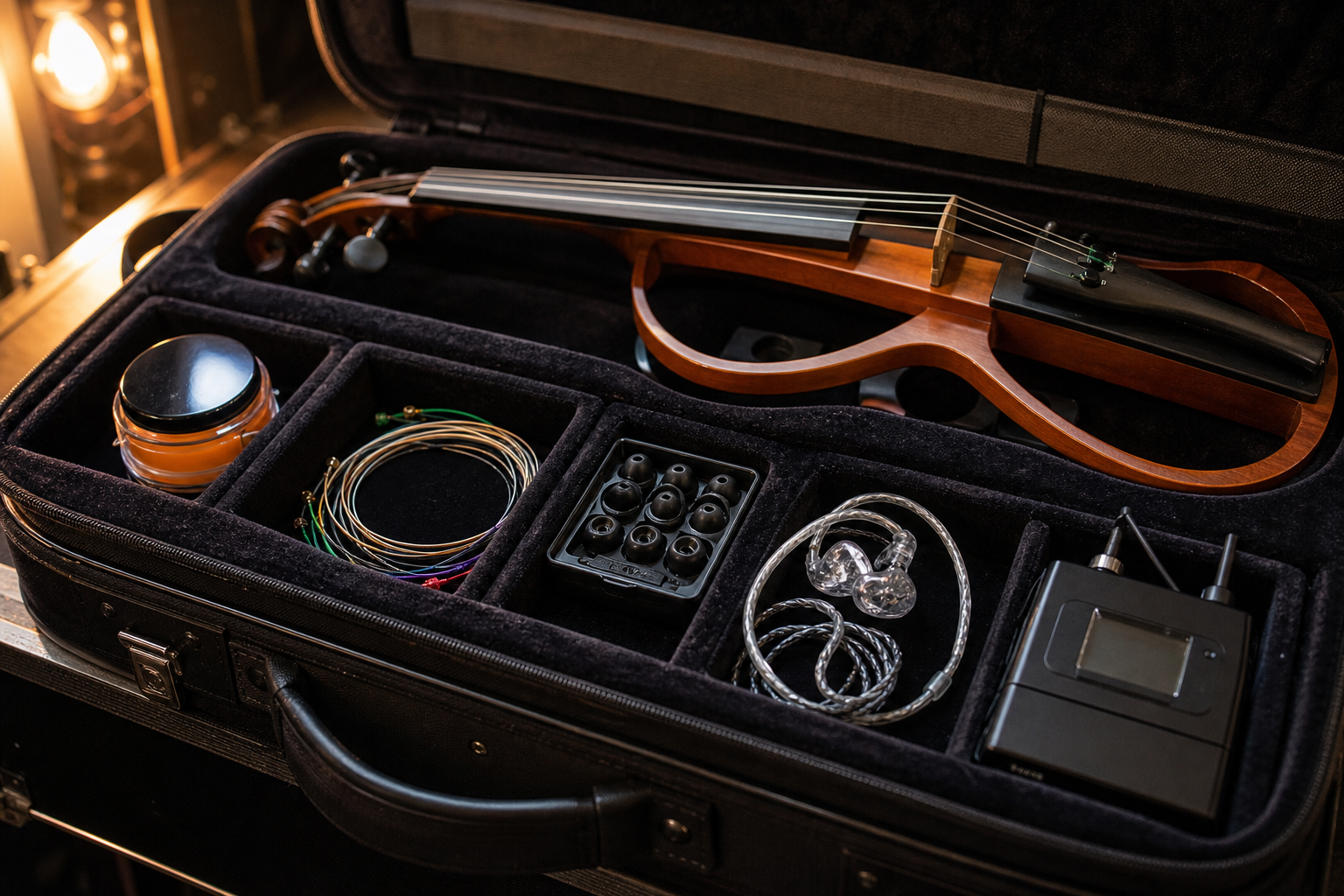
How does Tanya Strings build an in-ear mix for live electric violin?
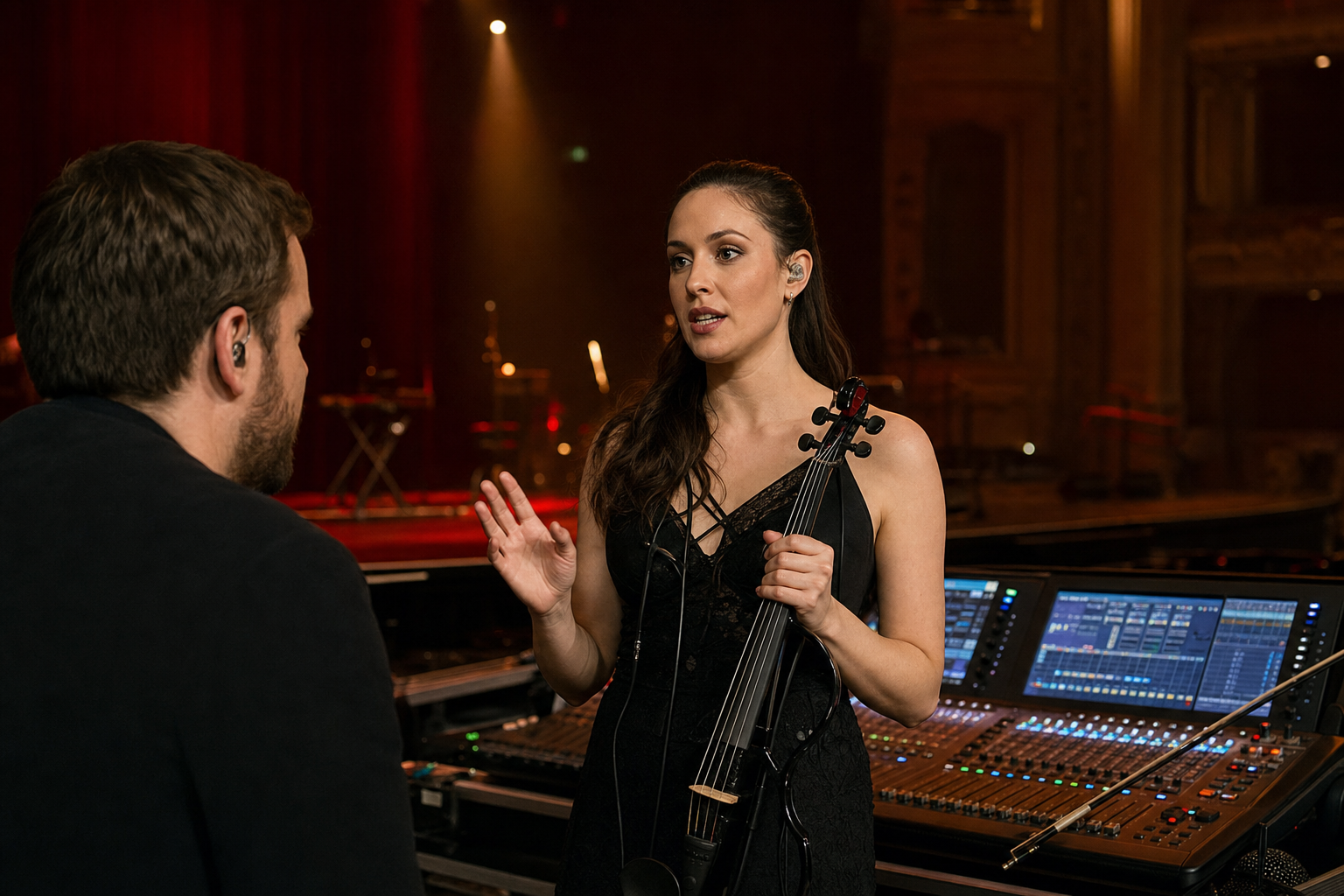
I want a mix that helps me perform, not a hi-fi fantasy. My electric violin needs enough level to feel centered, but I do not want it so loud that the bow sound turns brittle. Then I bring in the backing track or click just high enough to lock timing. Vocals, keys, or rhythm accents come after that, depending on the show.
What do I ask for first during soundcheck?
- Violin first: one dry, honest signal so I know where the note center sits.
- Track or click second: only enough to feel time with confidence.
- Band color third: the musical context comes in after the core instrument is already stable.
- Volume discipline last: if the mix feels exciting only because it is loud, it is the wrong mix.
The goal is simple: less guessing, less overplaying, and less end-of-show ear fatigue.
What should you buy first if your budget is tight?
If money is limited, I would spend in this order:
- Buy first: a dependable wired IEM with proper isolation, usually Shure SE215 or ATH-E40 territory.
- Buy next: better tips, a spare cable if available, and a case routine that prevents last-minute failure.
- Buy later: premium earphones, wireless add-ons, or custom solutions after the core monitor workflow already works.
That order keeps your money attached to stage reliability instead of marketing excitement.
FAQ
Are in-ear monitors better than wedges for electric violin?
Often yes. In-ears usually give the electric violinist a more repeatable pitch reference and better isolation from loud stage spill, especially when backing tracks are involved.
What is the best first in-ear monitor for most electric violinists?
For most players, the safest first buy is still the Shure SE215 because it handles the basic stage problems well without asking for premium money.
Do expensive in-ear monitors improve intonation?
Sometimes, but only if fit and mix discipline are already in place. Premium detail helps when the rest of the live chain is already honest.
Should electric violinists choose more bass or more midrange in IEMs?
Usually more controlled midrange. That is where pitch center and most of the useful live information sit for electric violin.