Practice · 2026-06-09
Best Violin Practice Tools for Home Practice
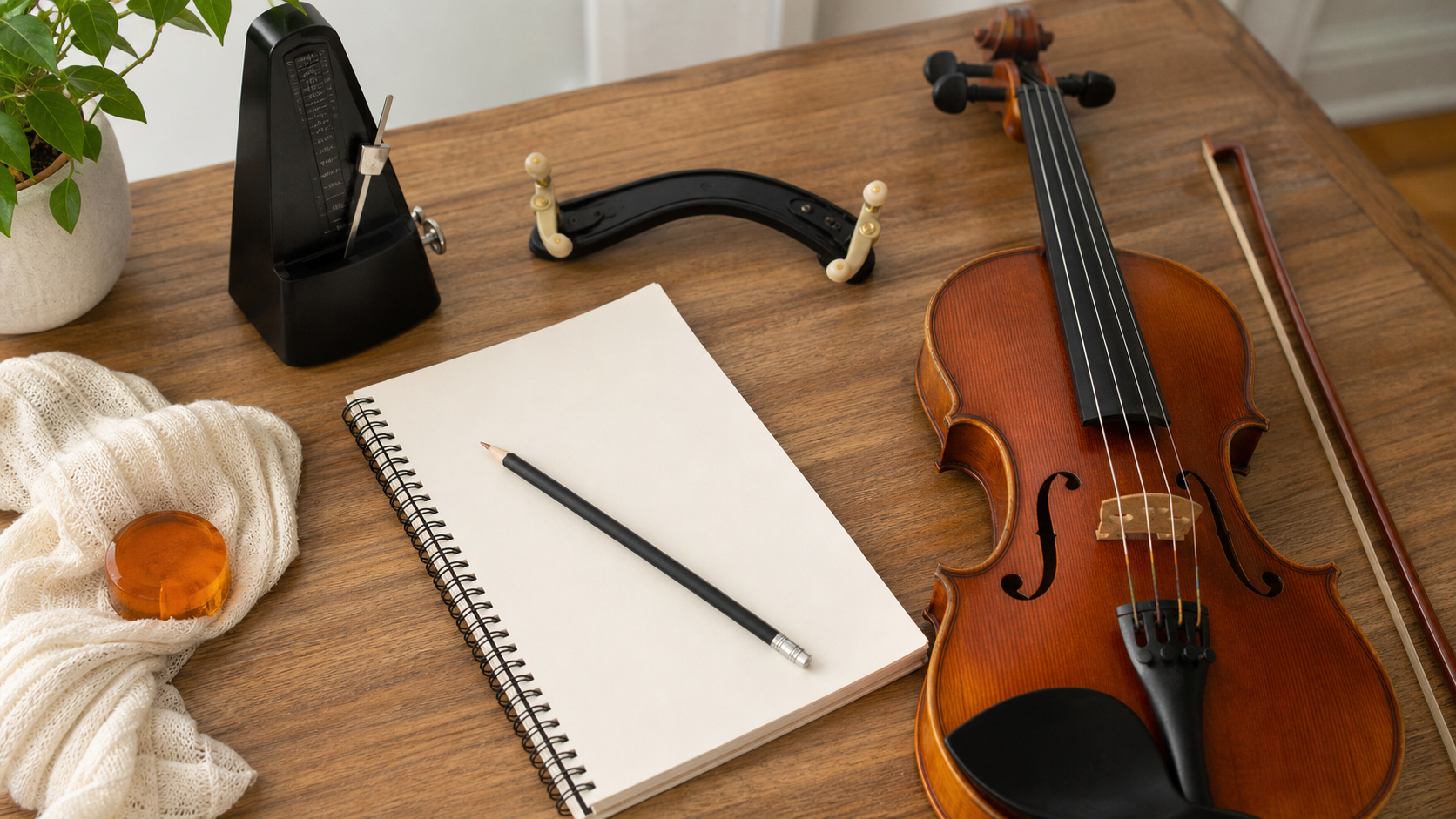
My top recommendation for home violin practice is a simple kit: a tuner-metronome, a sturdy music stand, a small practice notebook, and, when needed, a violin practice mute. These tools do not replace good teaching, but they make daily work calmer and easier to repeat. In my lessons, the students who progress fastest usually have fewer distractions, clearer rhythm, and one written goal before they start playing. If you buy only one thing first, choose the tuner-metronome; if posture is the problem, upgrade the stand next.
Follow Tanya Strings on Google
Add the site as a preferred source to see more new violin posts from Tanya Strings in Google.
Affiliate disclosure: Some links in this article are affiliate links. I may earn a commission if you make a purchase, at no extra cost to you.
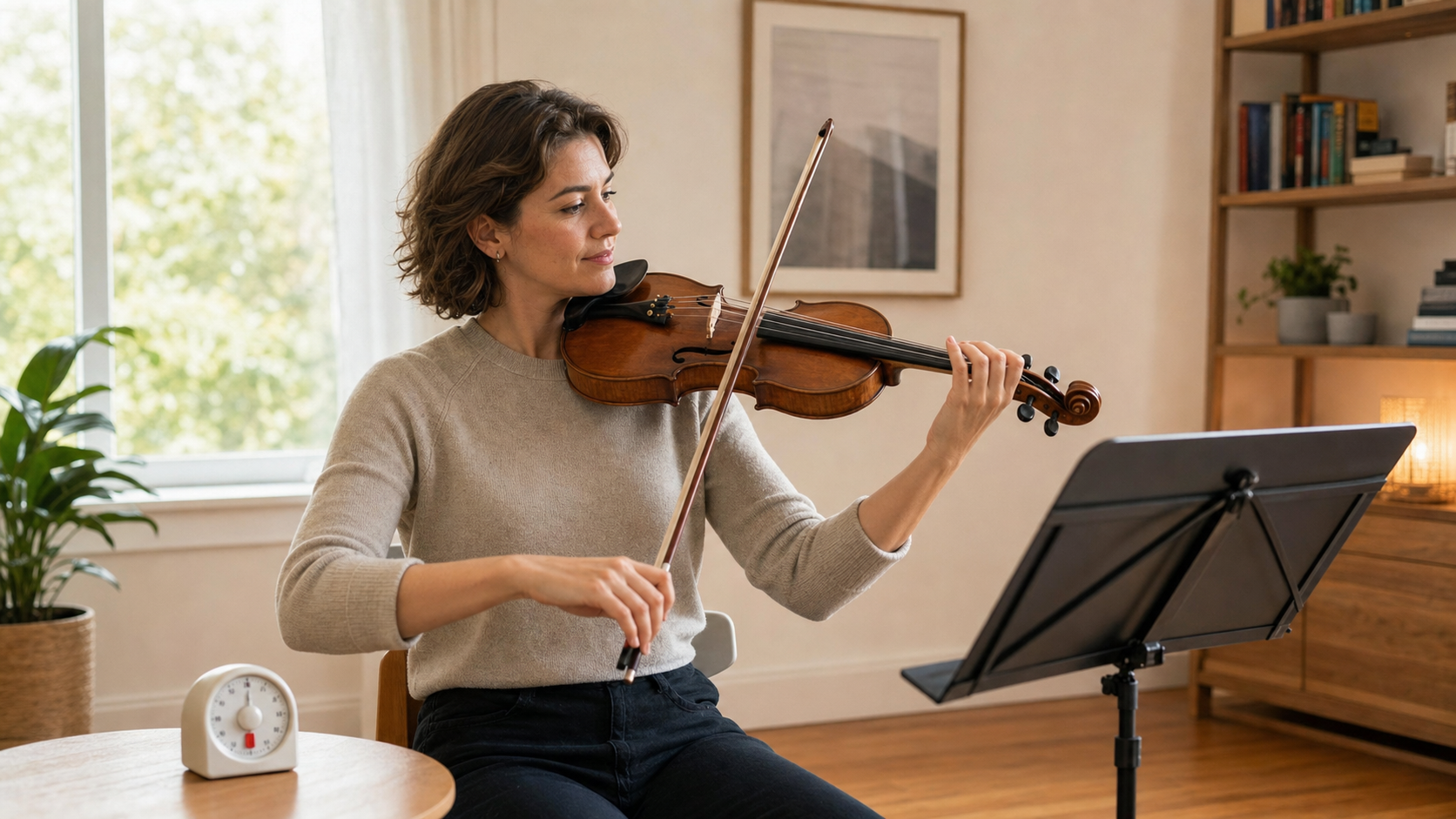
Which violin practice tools are worth buying first?
Buy the tools that remove daily friction. A tuner-metronome keeps pitch and rhythm honest. A strong stand protects posture. A notebook turns vague practice into a plan. A mute is useful for apartments, but it should not become the main sound you listen to every day.
| Tool | Best for | Tanya's note | Amazon link |
|---|---|---|---|
| Korg TM-70T tuner-metronome | Pitch and rhythm checks | Best first tool if you do not already have a reliable tuner and metronome. | Check on Amazon |
| Manhasset Model 48 music stand | Posture and reading comfort | A stable stand helps students avoid looking down and collapsing the upper body. | Check on Amazon |
| D'Addario Spector violin mute | Quiet practice | Helpful for shared spaces, but use it only when volume is the real problem. | Check on Amazon |
| Violin practice notebook | Daily goals and teacher notes | The least glamorous tool, and often the one that changes practice habits fastest. | Check on Amazon |
What are the pros and cons of each practice tool?
Korg TM-70T tuner-metronome
Korg describes the TM-70T as a combined tuner and metronome, which is exactly why I like this category for students: one device handles two daily checks without opening a phone.
- Pros: supports tuning, rhythm practice, tempo discipline, and focused scale work.
- Cons: students can stare at the tuner instead of listening, so use it as a check, not a crutch.
Find Korg TM-70T options on Amazon
Manhasset Model 48 music stand
A solid music stand matters more than beginners expect. When the stand is too low or wobbly, the head drops and the violin setup usually follows it.
- Pros: stable, simple, good for standing or seated practice, and widely used in schools and studios.
- Cons: less portable than folding wire stands and more than some students need for travel.
Find Manhasset Model 48 stands on Amazon
D'Addario Spector violin mute
D'Addario presents the Spector mute as a way to reduce violin volume for practice or muted playing. I see it as a helpful apartment tool, not an everyday tone teacher.
- Pros: reduces volume, easy to keep in the case, useful for late practice or shared homes.
- Cons: changes the sound and response, so students still need regular unmuted listening.
Find D'Addario Spector violin mutes on Amazon
What should a beginner violin practice routine include?
A beginner violin routine should include tuning, posture, open strings, left-hand placement, one focused passage, and a short review. The order matters. When a student begins with a difficult piece immediately, the body often tightens before the ears have settled.
- 2 minutes: tune, breathe, and check shoulder height.
- 4 minutes: open strings with slow bows.
- 5 minutes: scale or finger pattern in first position.
- 7 minutes: one difficult passage, very slowly.
- 2 minutes: play something easy with a beautiful sound.
How long should you practice violin at home each day?
Most beginners do well with 15 to 25 focused minutes per day. Intermediate players often need 35 to 60 minutes, split into blocks. The useful question is not only time. Ask what changed by the end of the session.
| Level | Good daily target | Main focus |
|---|---|---|
| New beginner | 10 to 15 minutes | Posture, bow direction, clean open strings |
| Beginner with pieces | 20 to 25 minutes | Simple scales, rhythm, one small passage |
| Intermediate student | 35 to 60 minutes | Tone, intonation, shifting, repertoire sections |
How do you practice violin without shoulder and hand tension?
Tension usually appears when the task is too fast, too loud, or too large. Make the task smaller before correcting the sound. Put the violin down for a moment, roll the shoulders, reset the jaw, then try one bow on one note.
My favorite teacher check is simple: if the thumb cannot breathe, the phrase cannot breathe. The left thumb and bow thumb should feel available, not locked. A student who learns this early saves months of frustration later.
For wider musician-health context, guidance from NIOSH on playing-related musculoskeletal disorders, a clinical review on performance-related musician injuries, and medical writing on musculoskeletal problems in string players all support the same practical idea I use in lessons: notice discomfort early, break practice into smaller blocks, and do not train through pain.
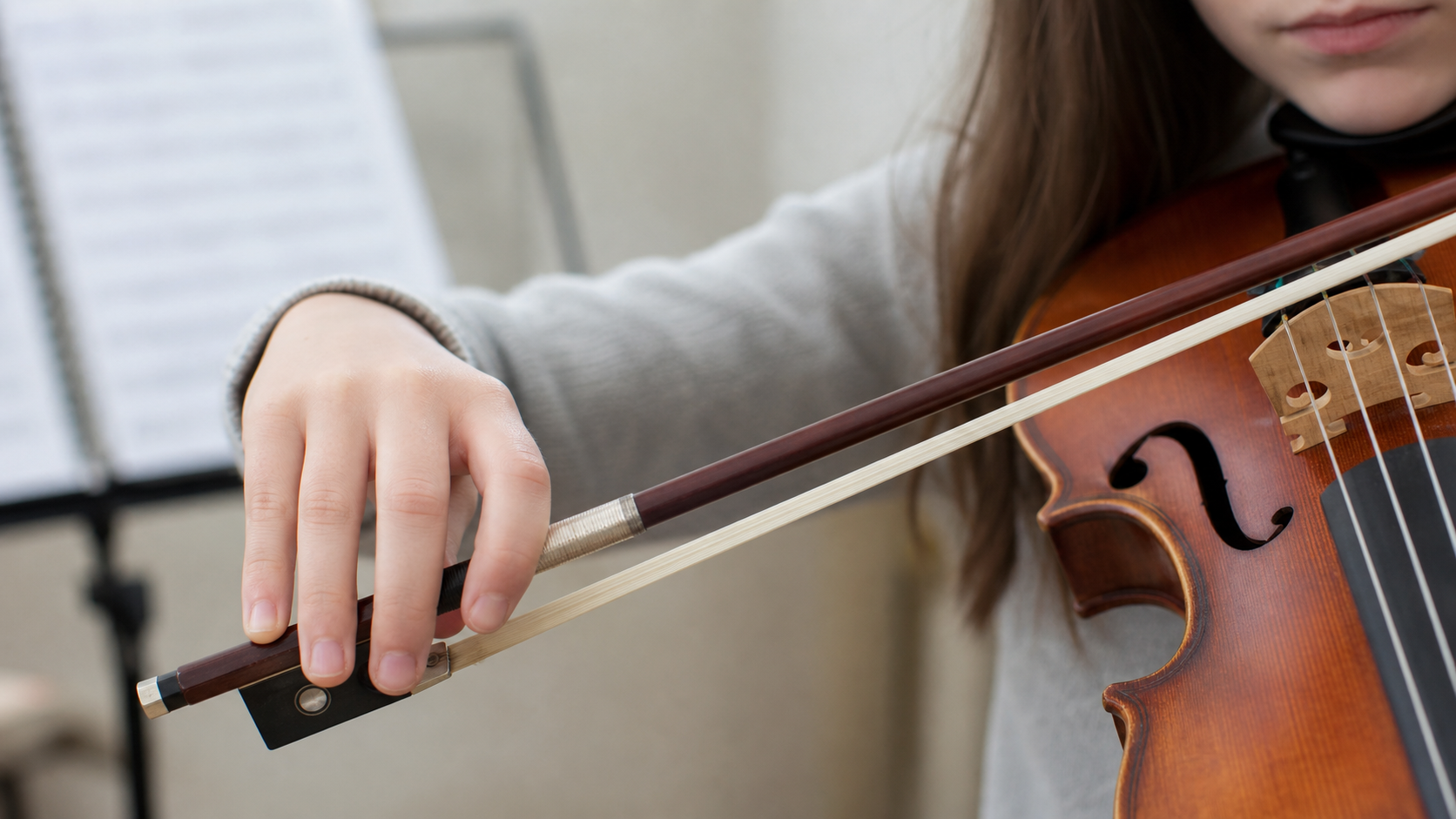
What is the 20-minute violin practice plan Tanya recommends?
Use the same structure for two weeks before changing it. Repetition makes practice calmer because the student knows what comes next.
- Prepare: tune, set the stand height, and choose one goal.
- Wake up the bow: play open strings near the middle of the bow.
- Wake up the left hand: play a slow scale with light fingers.
- Repair one spot: choose two measures, not the whole piece.
- Finish musically: play an easy section with relaxed sound.
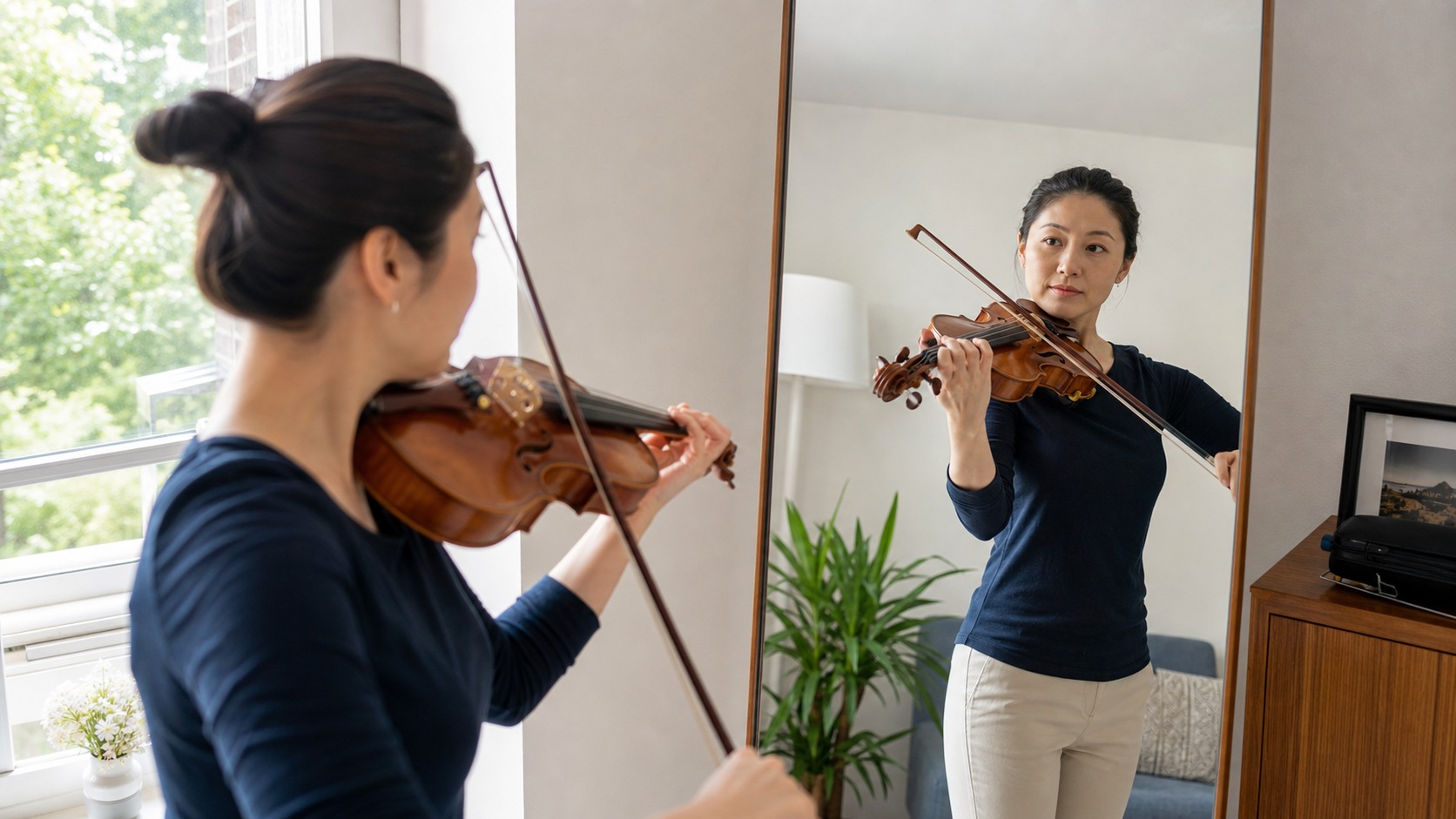
How can a mirror improve violin posture at home?
A mirror helps students see what they cannot feel yet. Check whether the scroll is dropping, the wrist is collapsing, or the bow is drifting away from the bridge. Use the mirror for short checks only. Looking constantly into the mirror can pull attention away from listening.
How do you know if violin practice is working?
Good practice leaves evidence. The sound may become steadier, the bow may travel straighter, or the hard passage may feel less rushed. Progress can be quiet, so write it down.
- What sounded better today?
- What still felt tight or unclear?
- What is the first task tomorrow?
What mistakes make home violin practice harder?
The most common mistake is repeating the whole piece from the beginning every time. That trains the easy opening and avoids the place that needs attention. Another mistake is practicing tired hands. Stop before the body starts bargaining with the instrument.
- Do not practice everything at concert speed.
- Do not ignore pain, numbness, or sharp discomfort.
- Do not fix five problems at once.
- Do not end every session frustrated. Finish with one thing you can play well.
FAQ
How long should a beginner practice violin each day?
For many beginners, 20 focused minutes works better than one long unfocused session. The goal is calm repetition, clear listening, and one small improvement.
Should violin practice start with scales or songs?
Start with sound and simple scales, then apply the same skill inside a short musical passage. Songs improve faster when the body is already balanced.
How do I stop tension while practicing violin?
Pause often, release the shoulders, check the thumb, and use slower bows. Tension usually grows when the player repeats too fast for the body to organize.